※21: When Progress Meets Poetry: Henry Ward Ranger’s Gentle Vision of the Brooklyn Bridge
There's something almost rebellious about Henry Ward Ranger's Brooklyn Bridge. While his contemporaries were busy capturing the industrial might and steel-girded drama of America's newest marvel, Ranger chose whispers over shouts.

Picture this: It's 1899, and the Brooklyn Bridge has been standing for sixteen years, still holding the title of world's longest suspension bridge. The whole country is buzzing about progress, steel, and the future. Yet when Ranger set up his easel, he painted what feels like a love letter wrapped in golden light.

Born in 1858, Ranger came of age during America's great industrial awakening. He spent his formative years watching the country transform from rural landscapes to urban powerhouses. You'd expect someone living in the heart of New York City to paint the bridge like a monument to human achievement, all dramatic angles and imposing scale. Instead, Ranger did something quietly revolutionary. He made this engineering giant feel at home in the landscape, as if it had always belonged there.

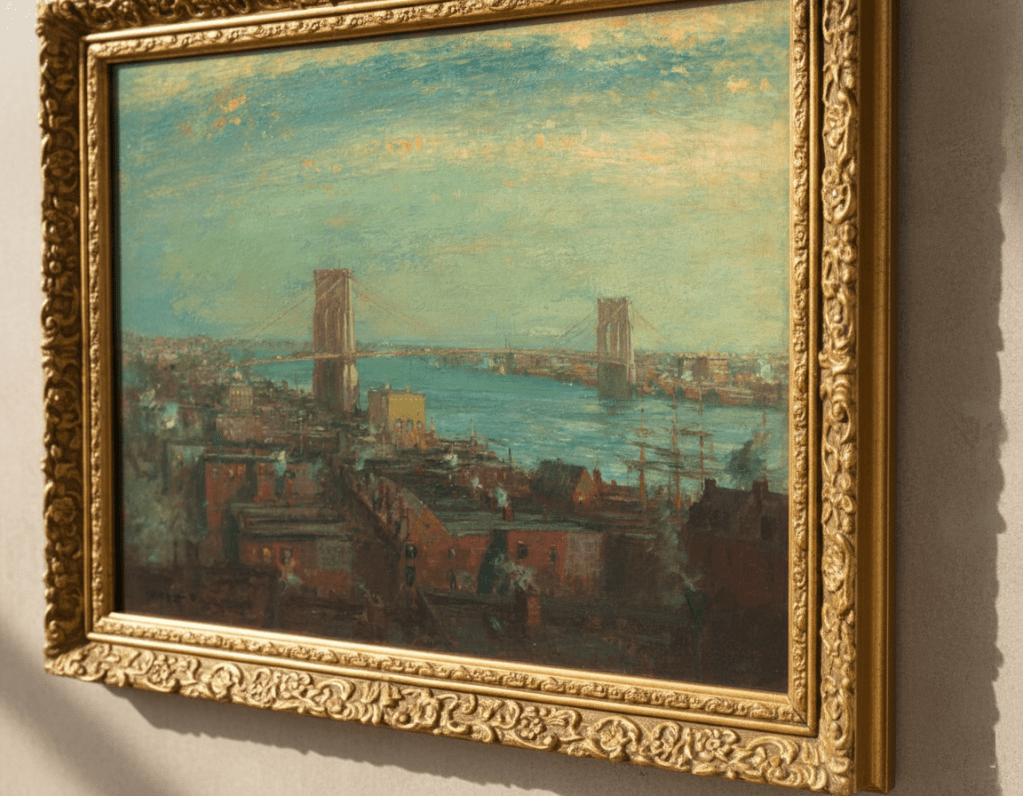
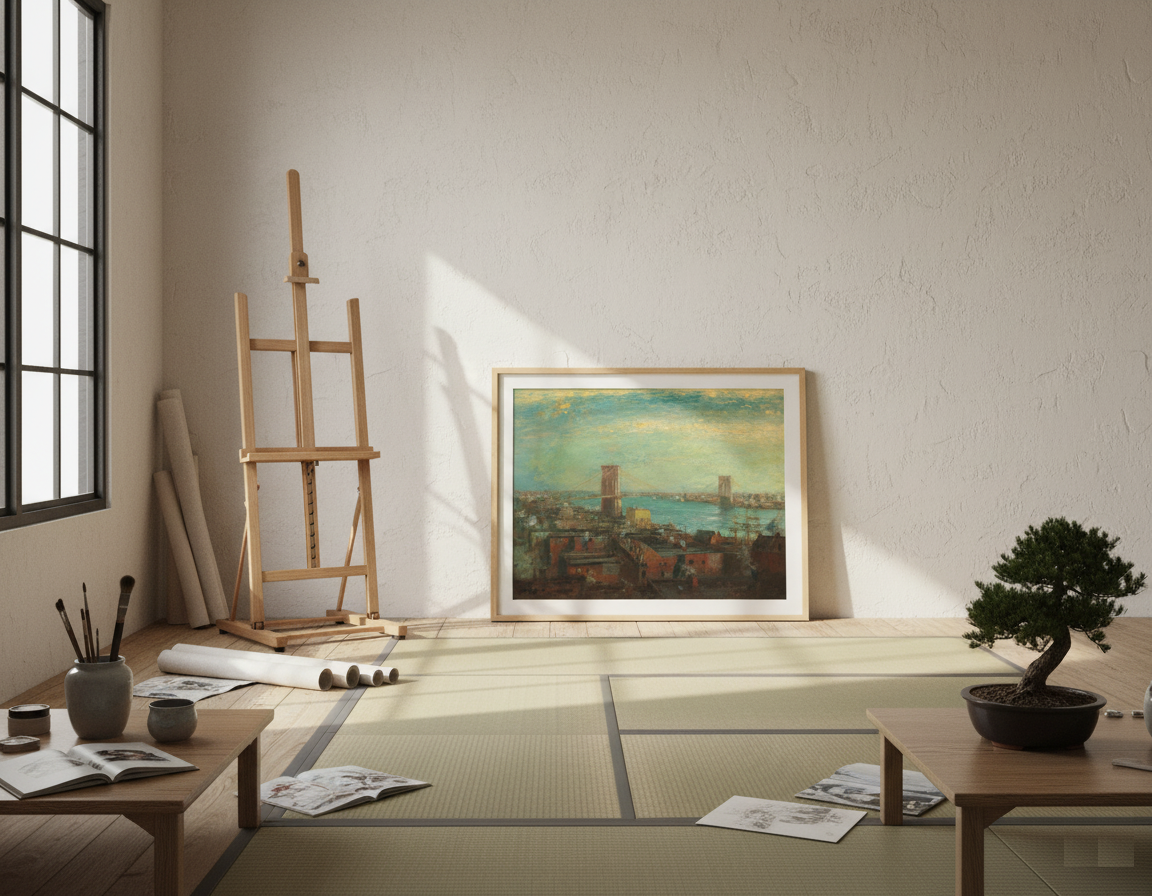
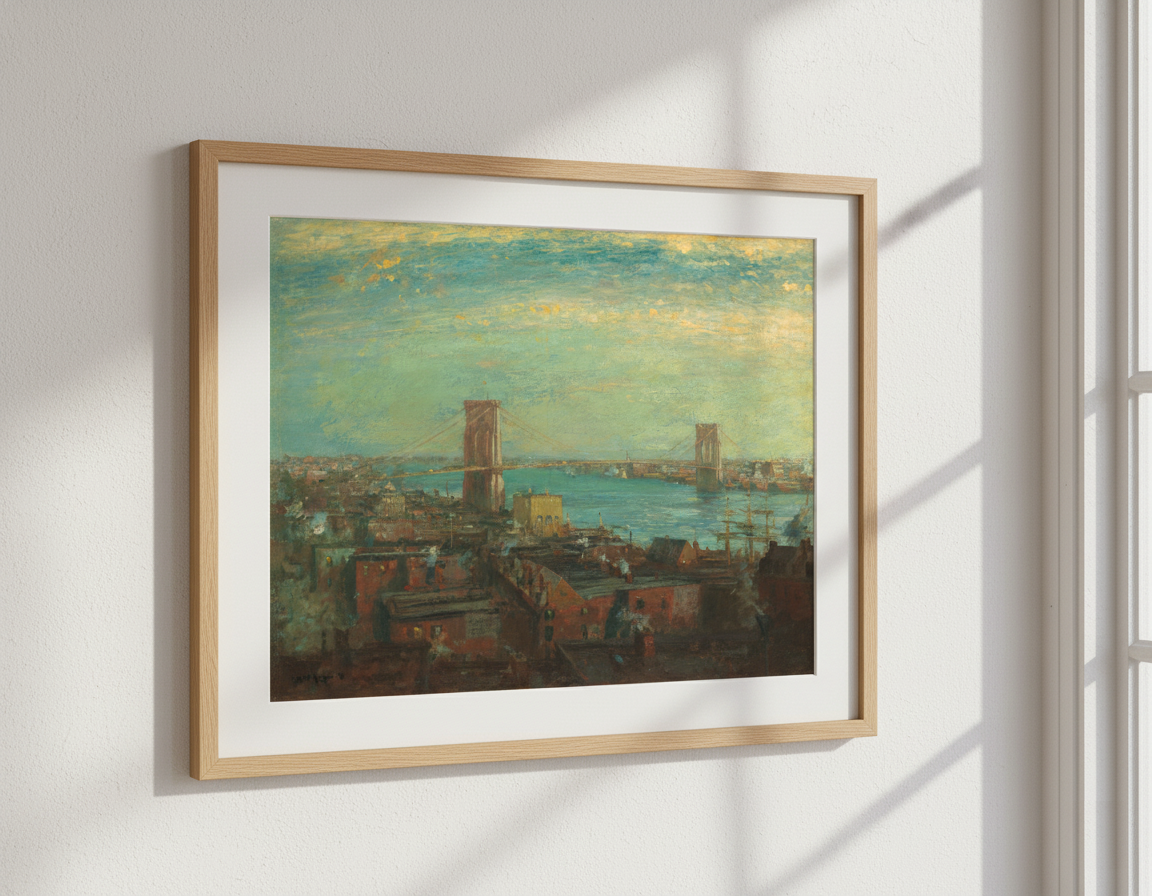
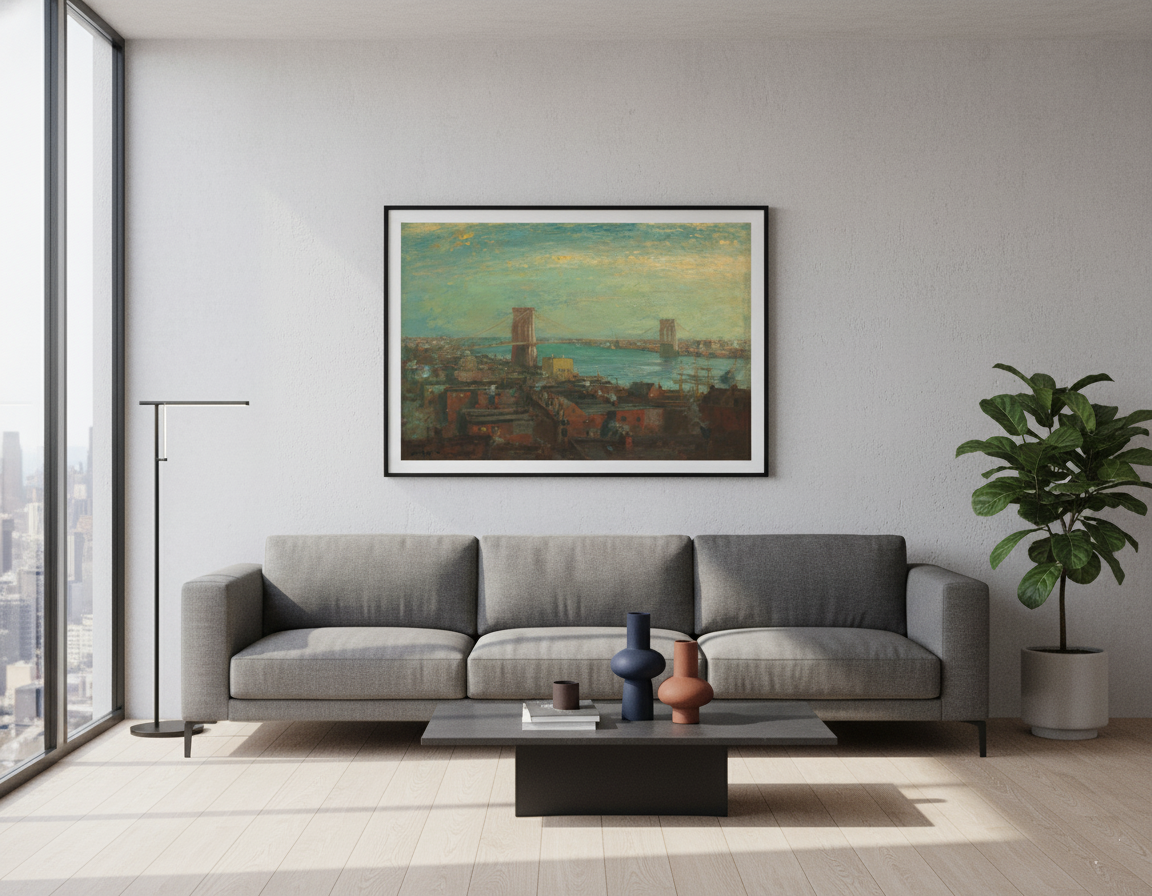
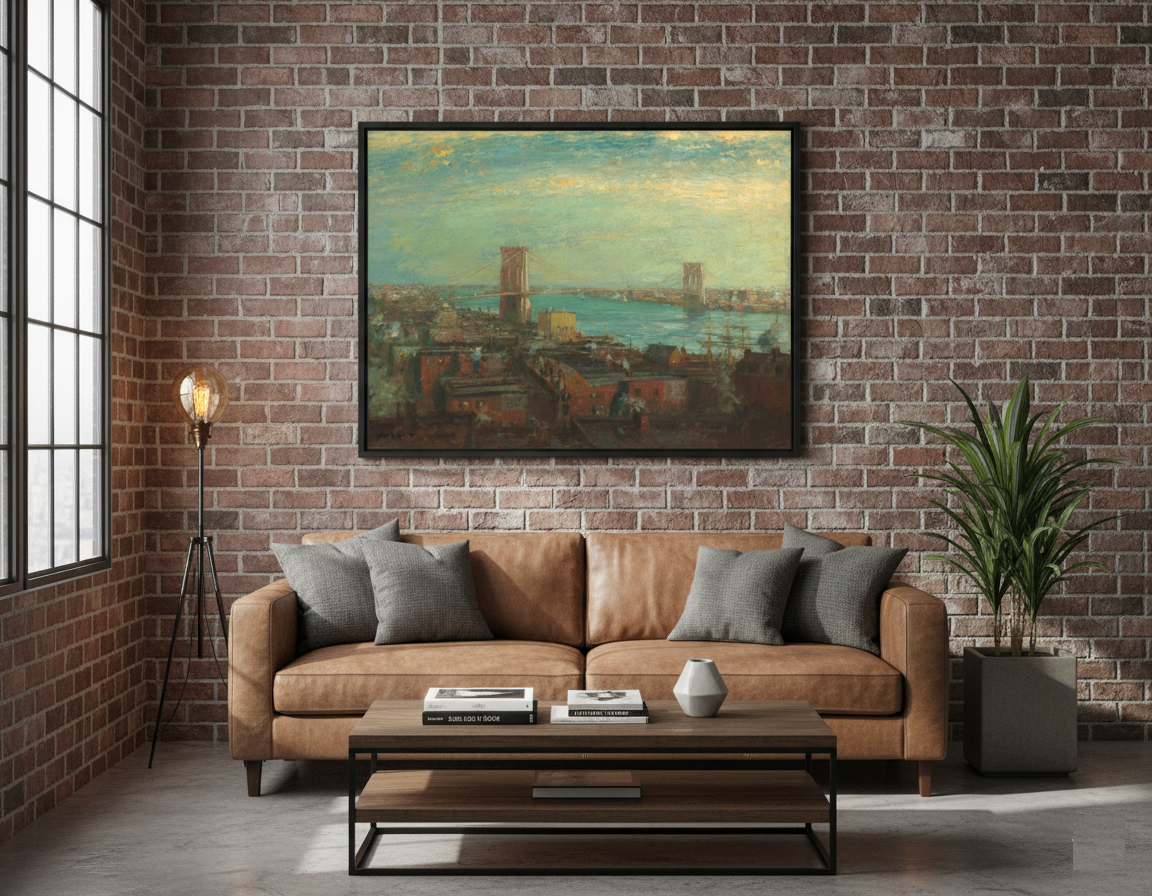
The painting draws you in with its rich, honeyed luminosity. Ranger's technique of layering paint and using transparent glazes creates depth that seems to breathe. The bridge doesn't dominate the canvas so much as settle into it, becoming part of a larger conversation between water, sky, and human ambition. It's like he's saying, "Yes, we built this incredible thing, but look how beautifully it lives alongside nature."

What strikes me most is how Ranger chose restraint in an age of excess. The Gilded Age was all about bigger, bolder, more impressive. Yet here's this artist, known primarily for his pastoral Connecticut scenes, applying that same gentle eye to one of modernity's most celebrated achievements. The bridge becomes less about conquest and more about harmony.

The composition feels almost musical. Your eye moves across the canvas in gentle waves, from the bridge's graceful cables down to the water's surface, then back up to the soft sky. There's nothing jarring or harsh about it. Even the bridge's massive stone towers seem to rise naturally, like cathedral spires that have grown from the earth rather than been imposed upon it.

This approach reveals something profound about Ranger's worldview. While others saw the bridge as a symbol of human dominance over nature, he saw integration. The warm, golden light that bathes everything suggests not just a specific time of day, but a kind of spiritual warmth, a sense that progress and beauty don't have to be enemies.

Of course, one could argue that Ranger's treatment is almost too gentle, perhaps missing some of the raw power and ambition that the bridge represented to his contemporaries. But that gentle quality is precisely what makes this painting endure. It offers us a different way of seeing progress, one that doesn't require us to choose between human achievement and natural beauty.

Standing before this work today, I'm reminded that there are many ways to tell the story of our relationship with technology and progress. Ranger chose poetry over proclamation, and his Brooklyn Bridge feels all the more powerful for it.

If you find yourself drawn to this kind of thoughtful, luminous artwork, you might enjoy exploring digital prints that capture similar moments of quiet beauty. You can discover a curated collection of art that speaks to the soul at https://thepelicanatelier21.etsy.com, where each piece is selected for its ability to bring warmth and contemplation into your space. For even more artistic inspiration, visit https://linktr.ee/thepelicanatelier to explore the full range of available prints and collections.




 Ngoluoc.vn
Leave a comment