

Picture this: you’re standing in steamy Cuba, winter of 1885, watching Winslow Homer pause mid-brushstroke as dust and feathers swirl through humid air. What he captured in that moment wasn’t just a cockfight. It was life itself, brutal and beautiful, frozen in watercolor.
Homer’s “The Cock Fight” hits differently than his usual work. Gone are the confident, sweeping brushstrokes we know from his Nassau paintings. Instead, we get something more deliberate, more contained. It’s like watching a jazz musician suddenly switch to chamber music. The change feels intentional, almost reverent.
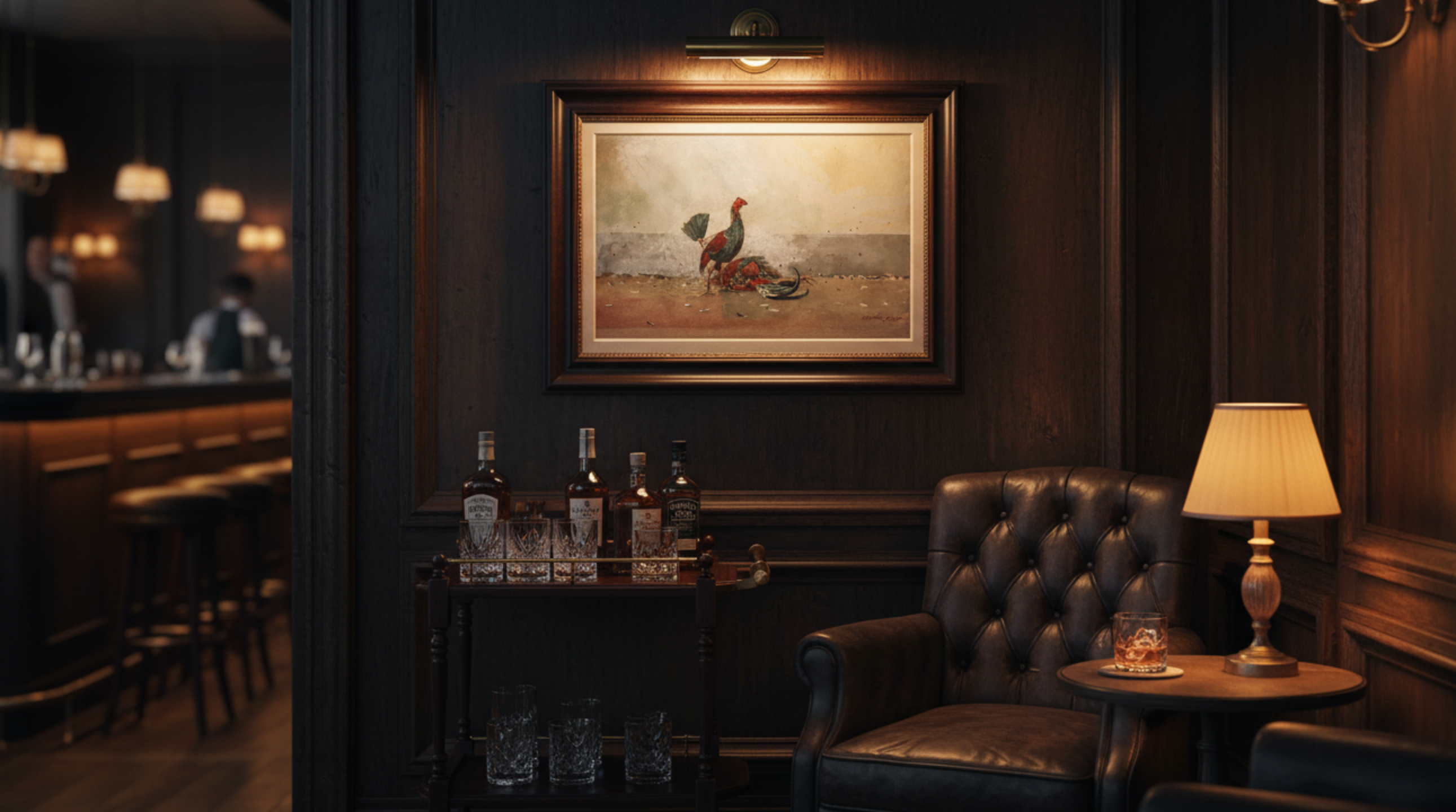
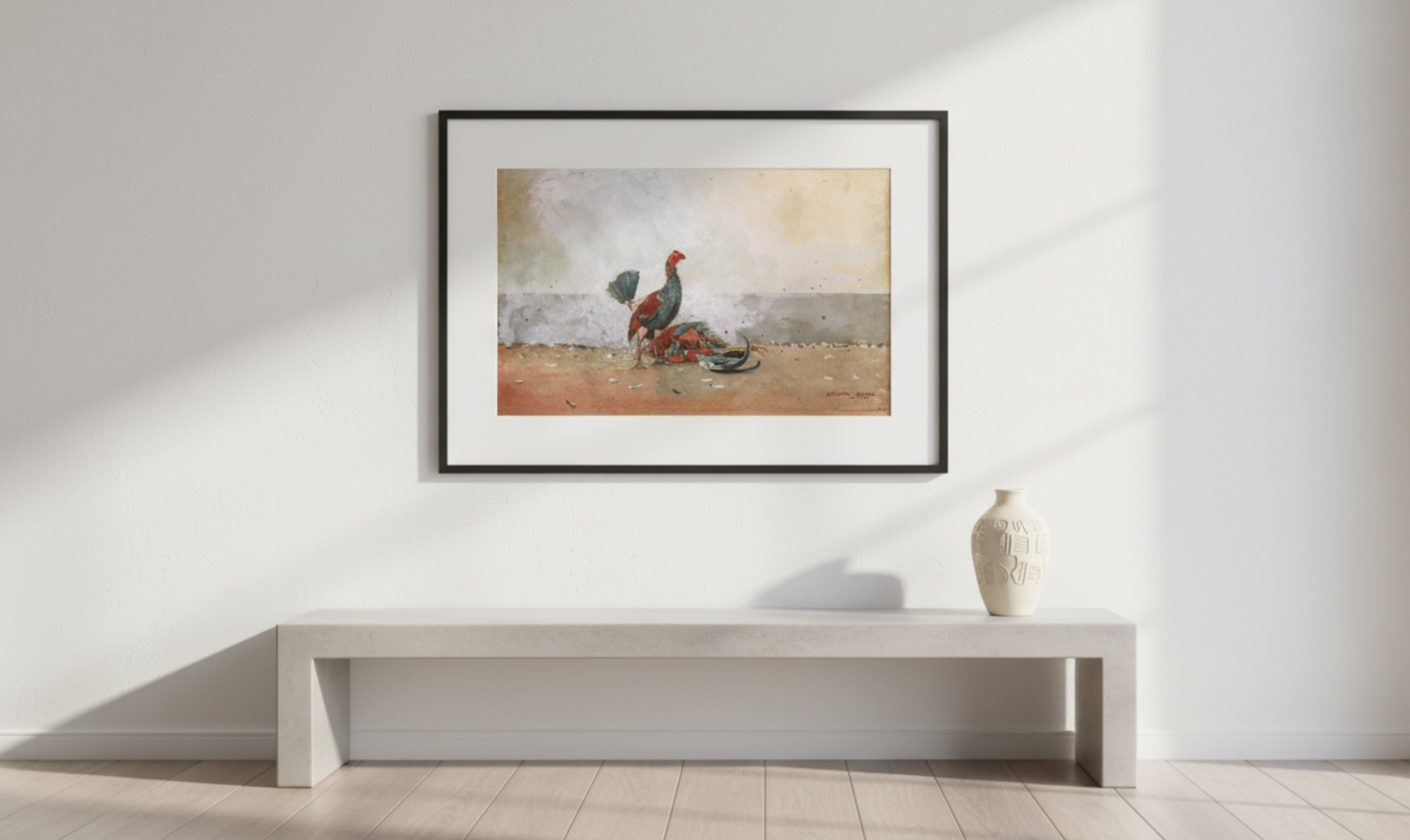
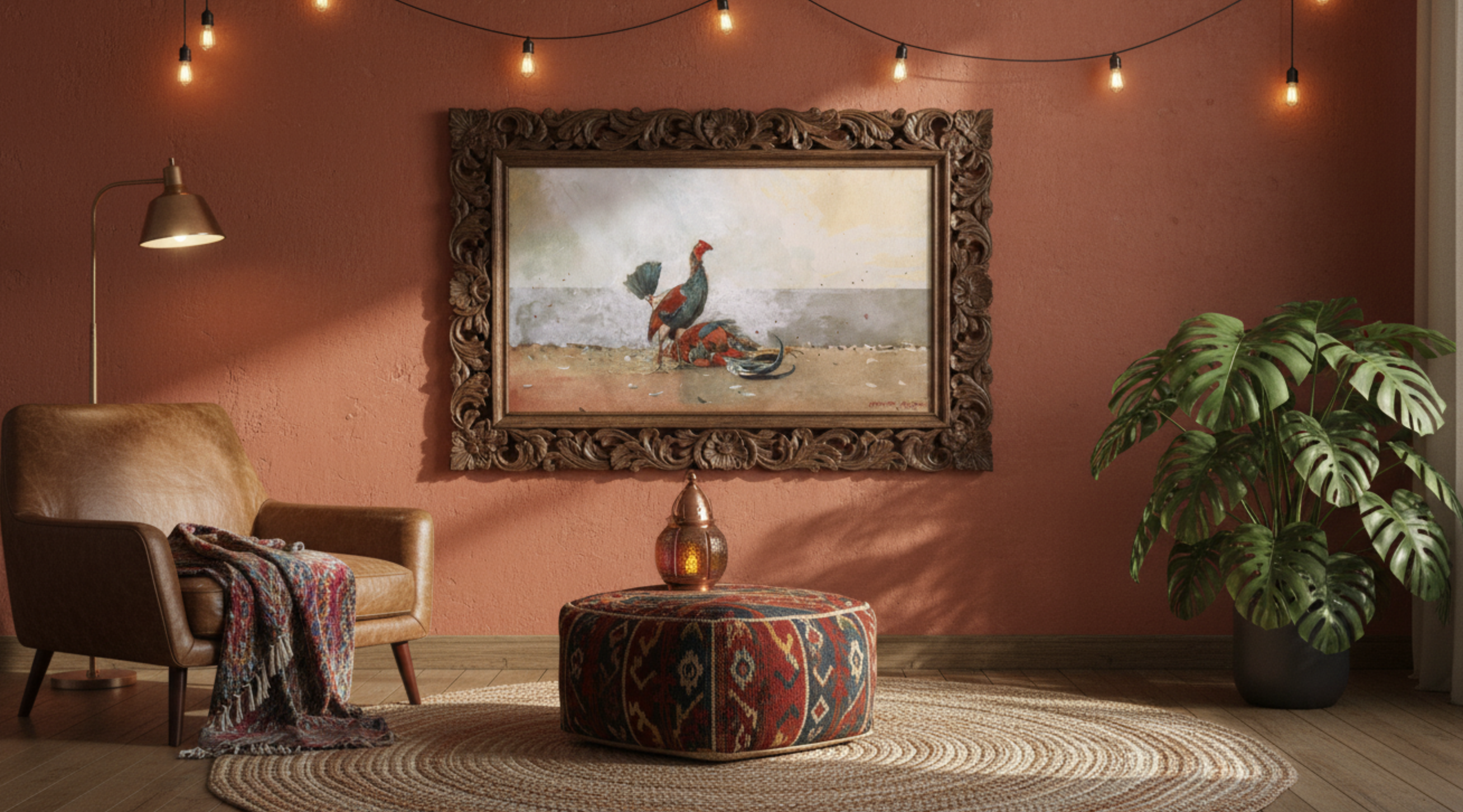
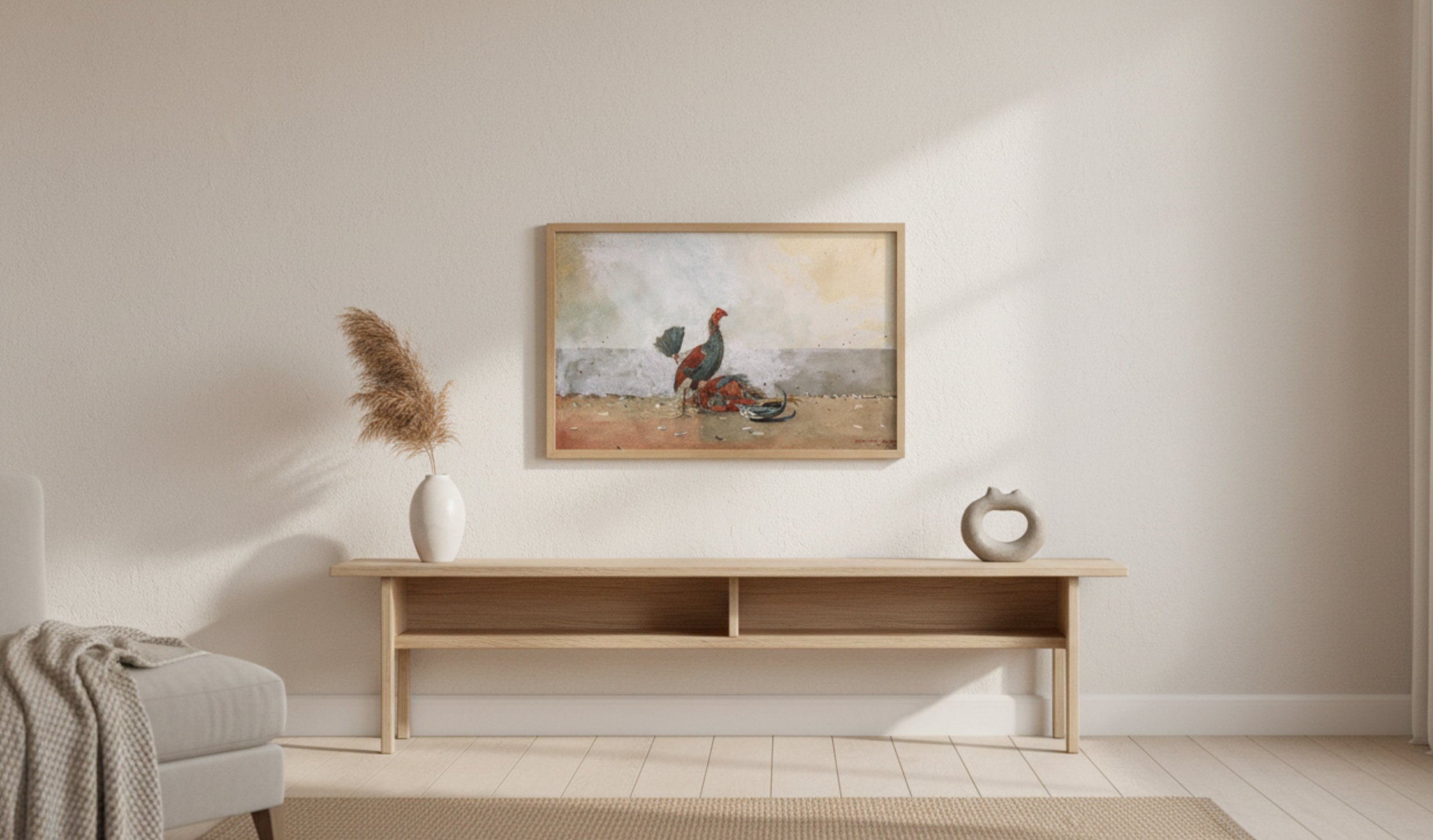
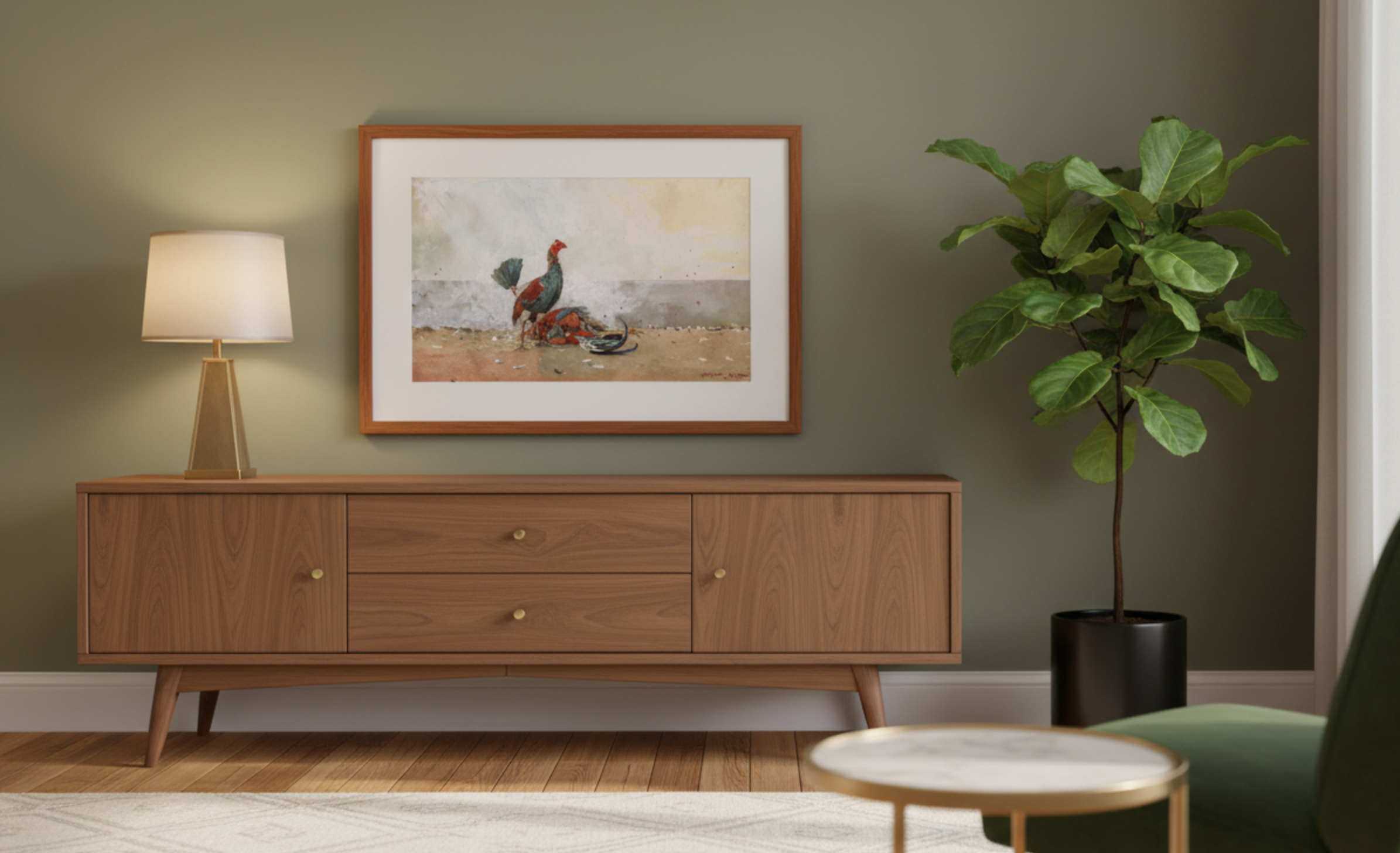
The composition stops you cold. Against a stark plaster wall, two roosters tell an entire story of triumph and defeat. The younger bird stands victorious while his older, more magnificently plumed opponent lies dying. Those decorative feathers that once proclaimed dominance now scatter like broken dreams across the dusty ground.
What strikes me most is Homer’s restraint. This could have been a blood-soaked spectacle, but instead it reads like poetry. The neutral palette speaks volumes. Where you might expect vibrant reds and dramatic shadows, Homer gives us muted earth tones that somehow make the scene more powerful, not less. It’s the artistic equivalent of speaking in whispers to make people lean in closer.
The technical execution reveals Homer’s evolution as an artist. By 1885, he’d already established himself as America’s premier watercolorist, but Cuba changed something in his approach. The “finicky handling” mentioned by scholars isn’t a criticism, it’s evidence of an artist wrestling with new subject matter, new light, new cultural realities. Every careful brushstroke suggests Homer understood he was documenting something significant.
Consider the historical moment. This was post-Civil War America, a nation still grappling with violence and its aftermath. Homer had covered the war as an illustrator, witnessed humanity at its most brutal and resilient. Perhaps this cockfight resonated as metaphor, the older generation giving way to the new, tradition battling change in the humid air of a changing world.
The floating feathers and dust create an almost cinematic quality. You can practically hear the final flutter, feel the Caribbean heat, smell the mixture of earth and violence. Homer captured not just the aftermath of conflict, but that suspended moment when everything hangs in the balance before settling into new reality.
What I find fascinating is how this watercolor sits within Homer’s broader Caribbean body of work. These weren’t vacation paintings. They were serious studies of light, culture, and the human condition in a tropical setting that challenged everything he thought he knew about color and composition. The neutral tones that characterize his Cuban work weren’t limitations, they were discoveries.
The paper itself tells a story. That thick, cream wove surface with trimmed edges suggests this was precious to Homer, carefully preserved and presented. The red-purple signature feels like a flourish of confidence, an artist claiming ownership of something important.
Today, “The Cock Fight” remains as relevant as ever. In our age of instant everything, there’s something profound about Homer’s patient observation, his willingness to sit with violence and find beauty without romanticizing brutality. The painting doesn’t celebrate the fight, it mourns and honors it simultaneously.
For those drawn to Homer’s unique vision of American life and his masterful watercolor technique, exploring high-quality digital reproductions can reveal details invisible in small reproductions. The subtle color gradations and Homer’s distinctive brushwork come alive when viewed at proper scale and resolution.
This watercolor reminds us why Homer remains essential viewing. He didn’t just paint what he saw, he painted what it felt like to see it. In those scattered feathers and muted colors, we find truth about conflict, change, and the strange beauty that emerges when old worlds give way to new ones.


 Ngoluoc.vn
Leave a comment