
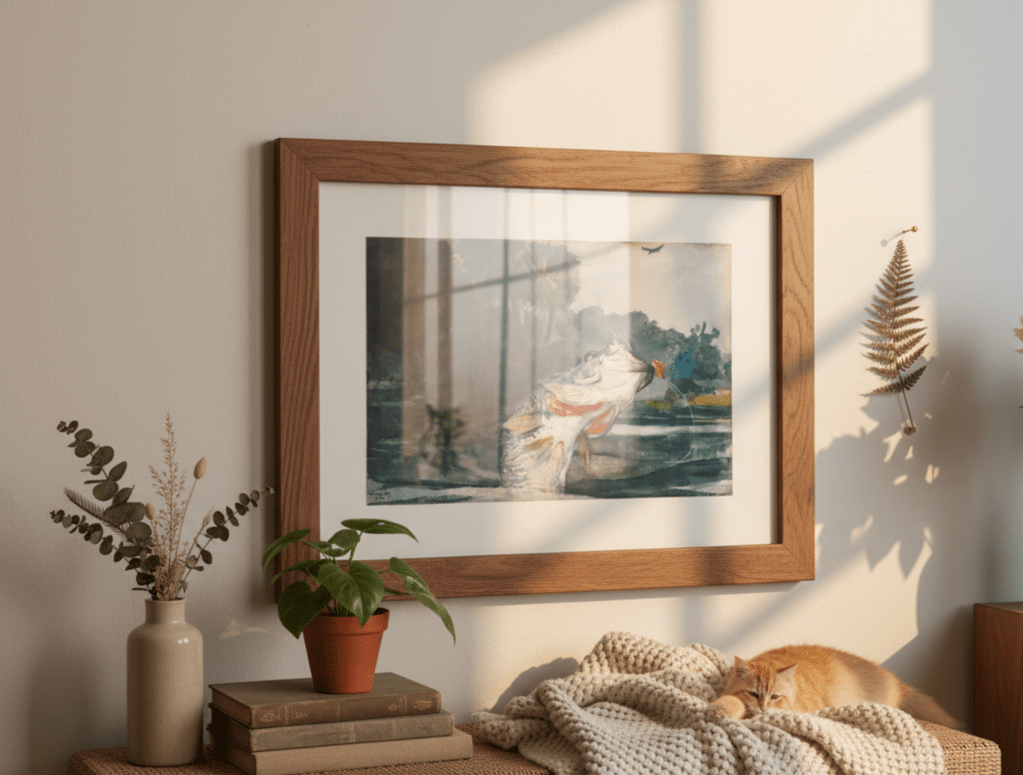
At first glance, Life-Size Black Bass feels almost electric. Painted in 1904 during Winslow Homer’s trip to Homosassa, Florida, this watercolor bursts with life, movement, and tension. A single fish leaps toward a scarlet lure, its silver-green body twisting midair. There’s no fisherman in sight, no horizon, just that instant of pure, suspended motion — the exact second between freedom and capture.
By this point in his life, Homer was already an American legend, known for his powerful seascapes and his unflinching portrayal of man’s struggle against nature. Yet here, late in his career, he turned his eye not to men but to a fish, and somehow made it feel just as human. You can sense his fascination with life itself — the pulse, the fight, the moment before fate decides.
Homer’s technique in Life-Size Black Bass is extraordinary. He used transparent watercolor layered with touches of opaque pigment, blending, blotting, and scraping to mimic the shimmer of scales and the blur of water. The background is loose and fluid, suggesting the dark, humid jungle of Florida. Against that murky depth, the fish gleams like a flash of lightning, startling and magnificent.
What’s fascinating is that Homer deliberately cropped the painting after finishing it, trimming away the edges to push the fish closer to the viewer. It’s as if he wanted us to flinch — to feel that sudden leap break into our space. The effect is almost cinematic, decades before cinema learned to do such things.
There’s also a haunting ambiguity here. The fish is alive, yet already doomed. It’s caught between two fates — the thrill of the chase and the inevitability of capture. Homer freezes that instant perfectly, allowing us to experience the beauty of life’s struggle without judgment or sentimentality.
By the time he painted this, Homer was nearing the end of his career and his life. You can feel a quiet reflection in the work, a meditation on vitality and mortality. That bass, suspended midair, becomes more than a fish. It becomes a symbol of life’s fragile spark, that flicker of energy just before it fades.
Homer’s decades of studying light, movement, and the natural world culminate here in watercolor — his favorite medium for spontaneity and truth. Every drop seems deliberate, yet alive, as if the paper itself breathes.
Even now, over a century later, Life-Size Black Bass still feels startlingly modern. It reminds us that art doesn’t need words to tell a story. Sometimes all it takes is one moment — a flash of color, a heartbeat of movement — to hold the entire world in suspension.
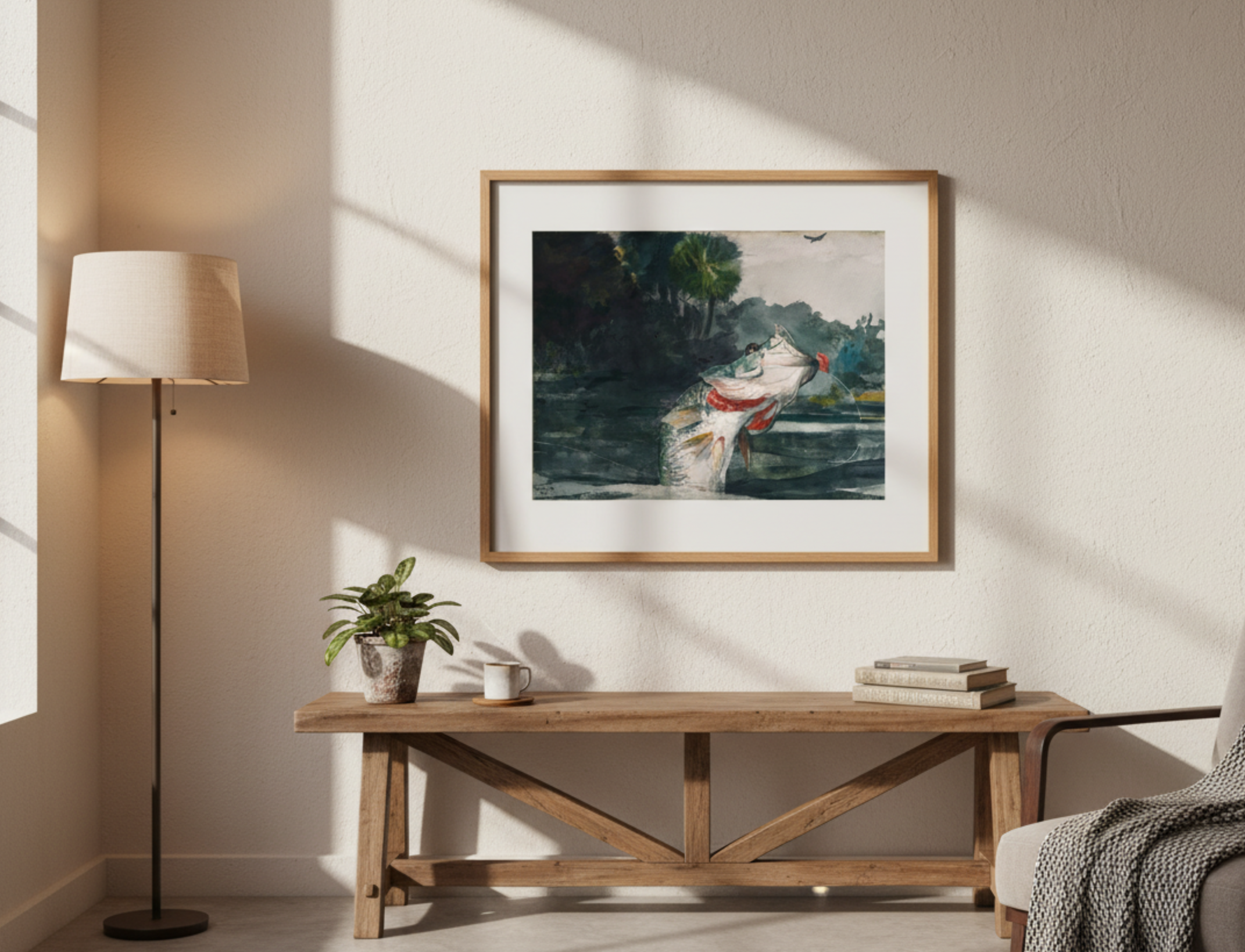
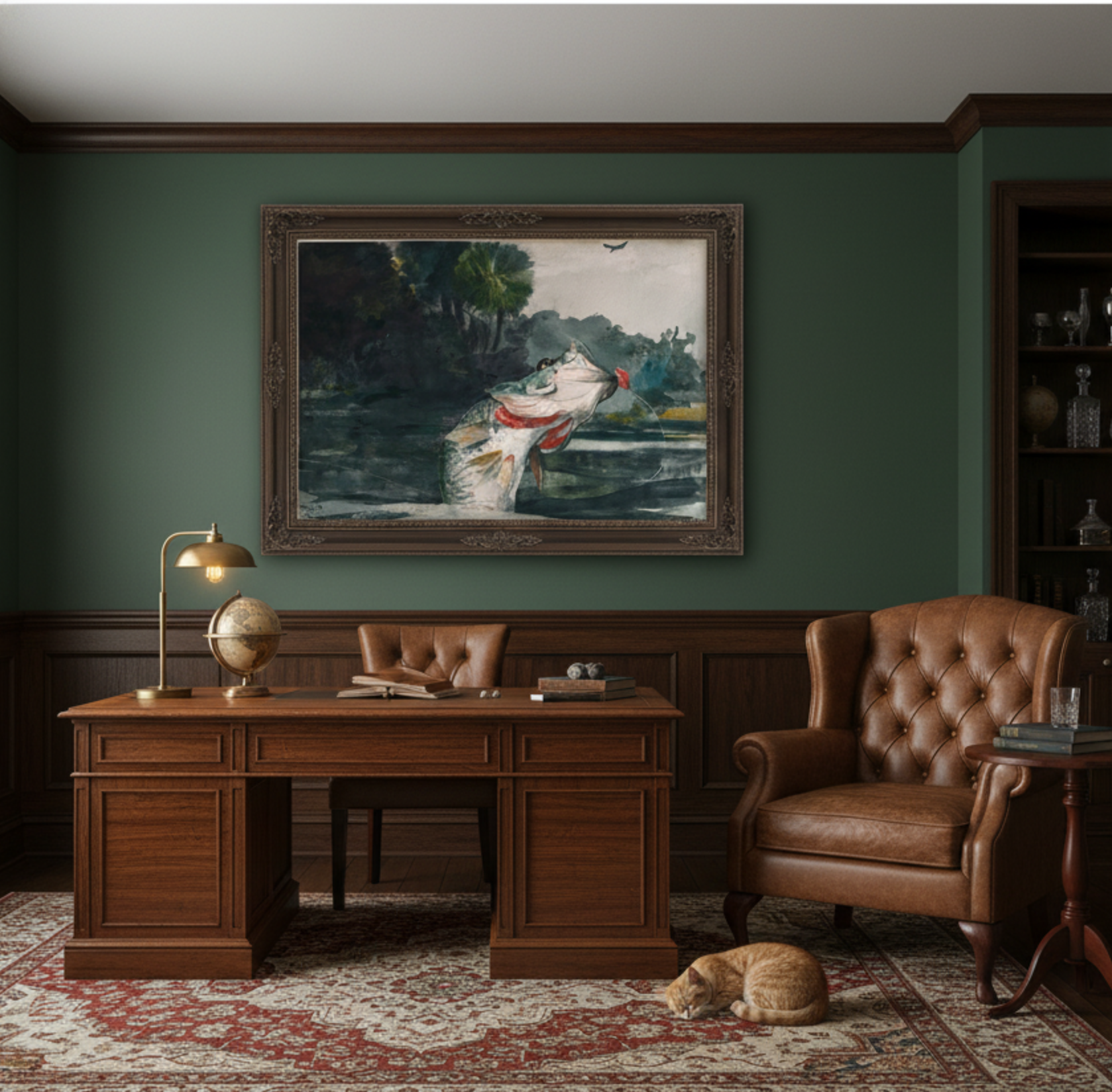
If you’d love to explore Winslow Homer’s art and other timeless works in high-quality digital form, visit The Pelican Atelier collection through the ~Linktree here~ . You’ll find curated prints and reproductions that bring this same spark of life into your own space.

 Ngoluoc.vn
Leave a comment