

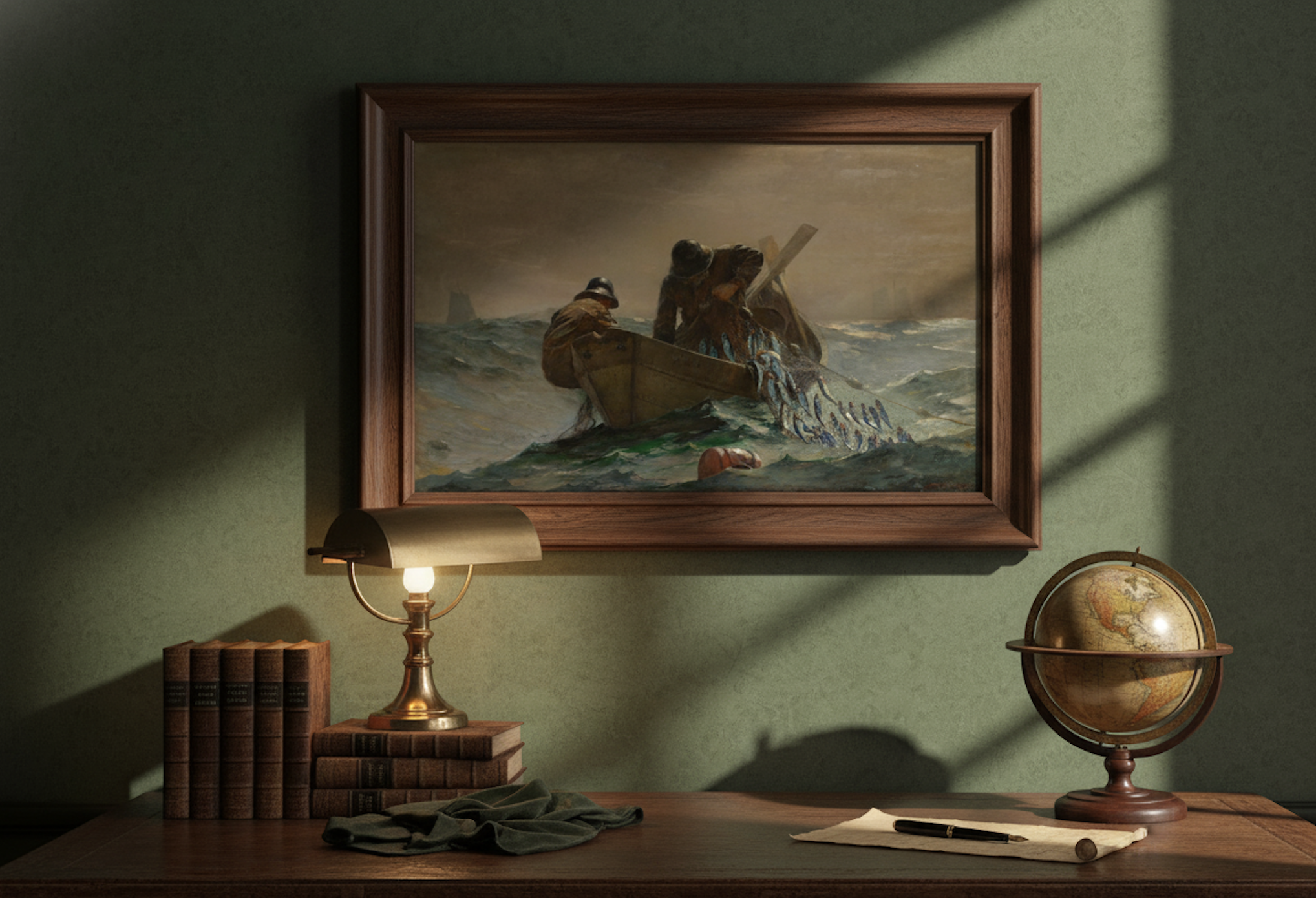
There’s something hauntingly quiet about Winslow Homer’s The Herring Net. You can almost smell the salt air, feel the wet chill of dawn, hear the rhythmic creak of wood against water. Painted in 1885, this masterpiece captures more than a scene—it captures the pulse of human endurance against nature’s vast, untamable power.
Homer had moved to Prouts Neck, Maine, just two years before painting this piece. That small, rugged coastal village changed everything for him. After spending time among English fishermen in Cullercoats, he returned to America with a new vision—no longer the quaint seaside scenes of earlier years, but raw, elemental depictions of human beings at the mercy of wind and wave. The Herring Net stands as one of his finest achievements from this period.
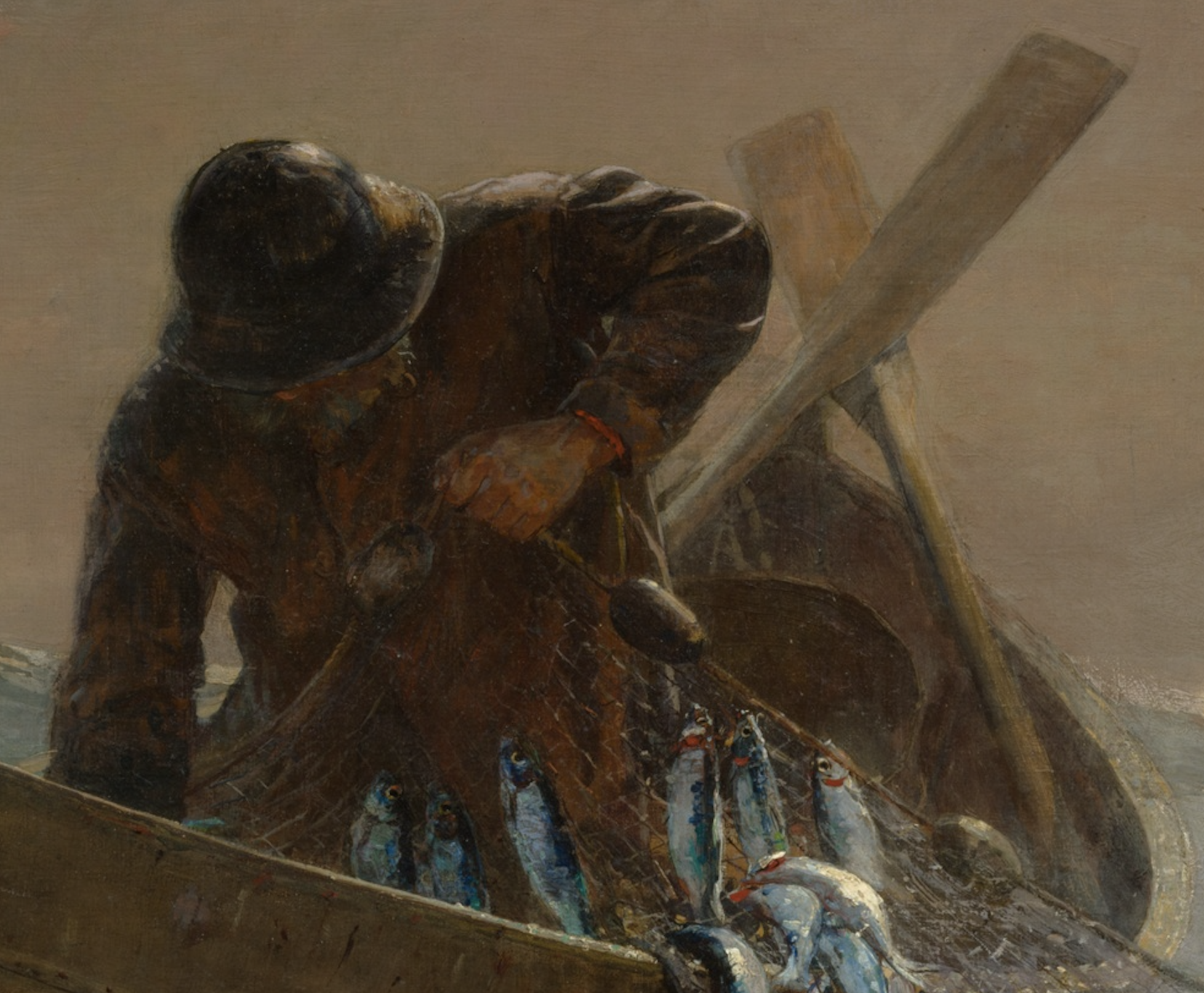
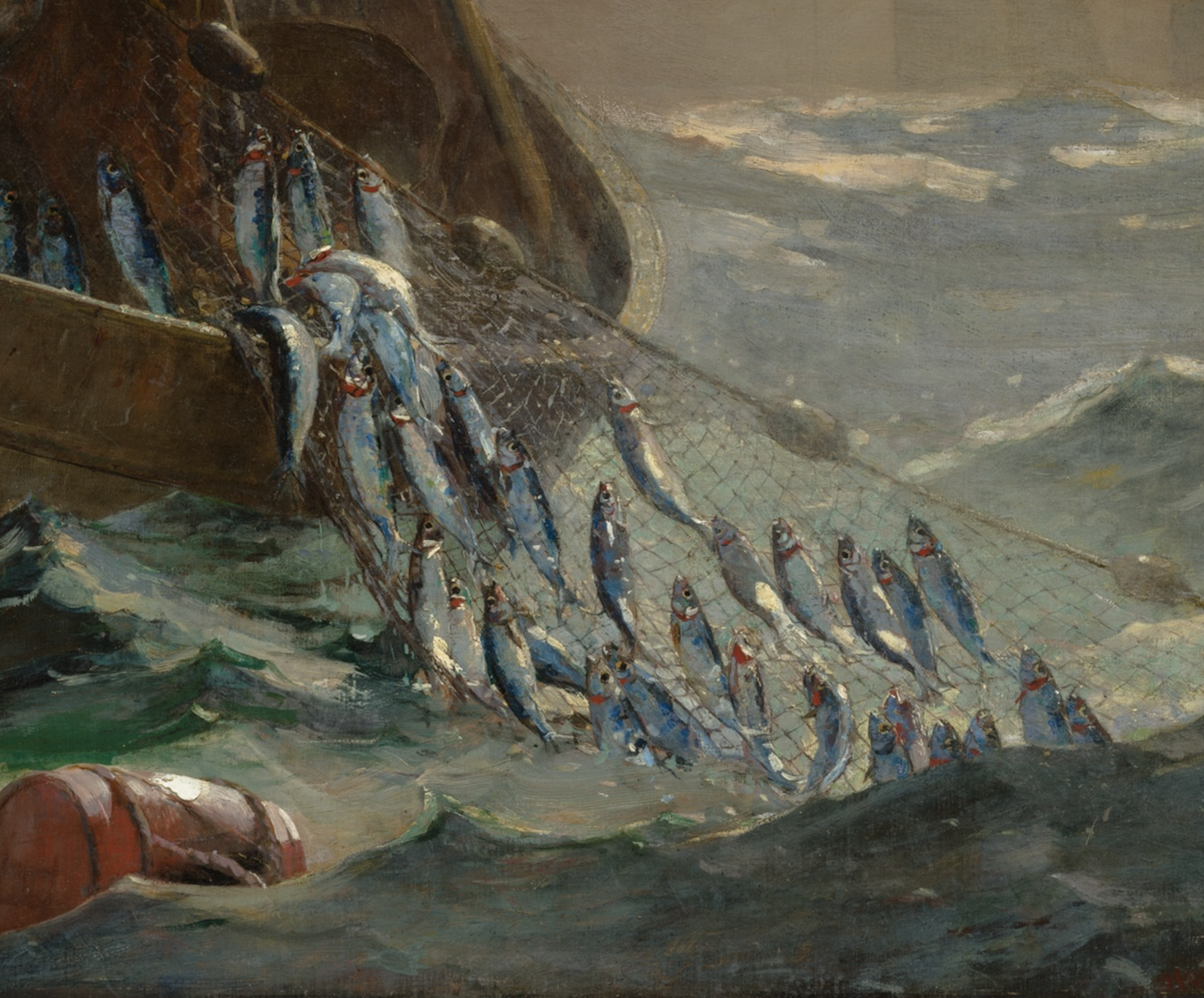
The painting shows two fishermen in a small dory, their world reduced to a grey mist and restless sea. One man hauls a heavy net, glistening with the silver of fresh-caught herring, while the other steadies the boat and empties the catch. The water surges around them, but the men are steadfast—lean, strong, intent. There’s no audience, no comfort, no land in sight. Only labor, light, and the endless rhythm of the ocean.
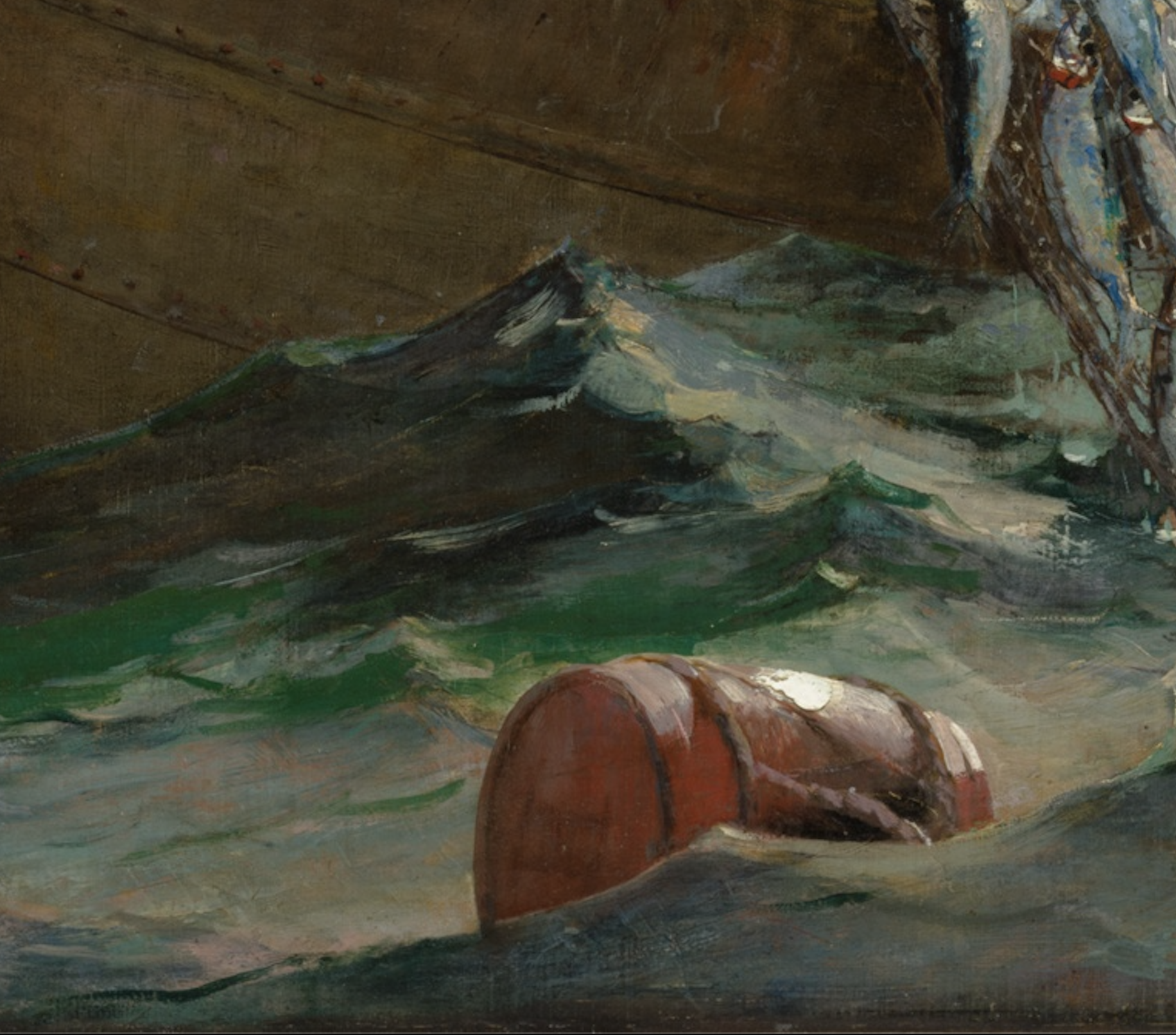
Homer’s brushwork here feels both disciplined and emotional. The tones are subdued, almost monochromatic at first glance, but the longer you look, the more you see—the cool greens of the swells, the fleeting warmth in the fishermen’s faces, the pale shimmer of fish caught in netting. It’s a quiet drama, an understated heroism that tells of survival and devotion. He doesn’t romanticize the sea; he respects it, accepts its danger, and still finds beauty in its relentlessness.
It’s also fascinating to note that Homer lived almost like a recluse during this time. Friends described him as solitary, sometimes brusque, but deeply connected to the rhythms of nature. He often painted from sketches made directly on the coast, standing in wind and spray. That honesty shows here. You can feel that he’s not painting for beauty’s sake—he’s painting truth, the kind only found where men risk their lives for their livelihood.
There’s a kind of moral clarity in The Herring Net, too. The teamwork of the two men reflects a quiet code of survival—trust, endurance, humility. The sea nurtures them, yet could easily claim them. It’s a metaphor Homer returned to again and again: the eternal contest between human effort and natural force.
What I find most compelling, though, is how still it all feels despite the motion. The horizon disappears into fog, and the viewer is left suspended in that same uncertainty the fishermen live with. There’s no hint of victory, only persistence. It’s the poetry of work, the dignity of labor rendered monumental.
Even today, the painting resonates with anyone who’s ever struggled against forces larger than themselves. It’s not just about fishing—it’s about human endurance, about the will to keep going even when the tide seems too strong.
If you’d like to experience more of Homer’s quiet intensity, I truly recommend exploring digital reproductions and curated prints of The Herring Net. You can find carefully restored versions through The Pelican Atelier’s online collection, with links to trusted platforms like Etsy and Amazon via The Pelican Atelier Linktree .
It’s remarkable how a single painting from 1885 can still speak so directly to our modern sense of struggle and hope. Homer reminds us that even in the hardest work, there’s beauty, and in every wave, a reflection of ourselves.





 Ngoluoc.vn
Leave a comment