
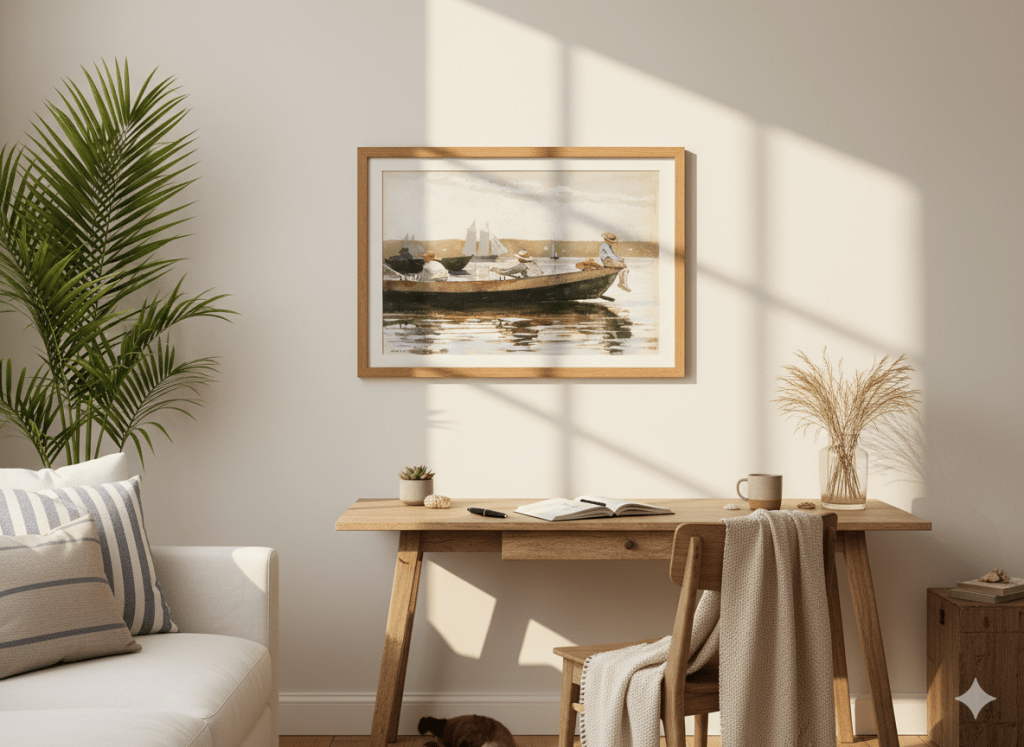
There’s a kind of soft, quiet magic in Winslow Homer’s Boys in a Dory that makes you pause for a moment before moving on. Painted in 1873, this watercolor belongs to one of the earliest and most tender phases of Homer’s career the moment when he first began exploring watercolors seriously. You can almost feel the warmth of the sun glancing off the water, the salty air from Gloucester Harbor brushing across the boys’ faces, the sound of the oars dipping in and out of the sea. It’s a picture of childhood caught in the light of a summer afternoon, both ordinary and timeless.
That year, Homer had just attended a groundbreaking exhibition by the American Society of Painters in Water Colors in New York. Inspired, he packed up and headed north to Gloucester, Massachusetts, a small fishing town perched on Cape Ann. There, he filled sketchbooks and small sheets with scenes of local life boys rowing dories, girls playing on the docks, children running barefoot across the sand. They were simple images, yet they glowed with truth. Boys in a Dory is one of the finest examples from this period, its gentle realism echoing the spirit of his beloved oil painting Snap the Whip from the previous year.
Homer’s watercolor technique at this point was still developing. You can see his care in every stroke the way the washes stay neatly inside pale pencil lines, the touches of opaque pigment layered to suggest form and depth. And yet, within that restraint, there’s already something remarkable happening. The sunlight dances on the ripples, the air itself feels alive, and the boys calm, absorbed, unselfconscious seem to drift in a golden silence. This is the beginning of the mastery that would later define Homer’s great travel watercolors from the Bahamas, Cuba, and England.
I find it deeply moving how Homer managed to turn such an ordinary subject a couple of boys in a boat into something that feels universal. It’s not about action or grandeur. It’s about presence. About stillness. About that fleeting time in life when the world seems vast and uncomplicated, when a small wooden boat can carry all your dreams. You can almost imagine Homer watching from the shore, sketchbook on his lap, quietly smiling at the scene before him.
There’s a line often attributed to him: “You will see, in the future I will live by my watercolors.” Looking at Boys in a Dory, it feels almost prophetic. Within this modest study, you can already sense the confidence and lightness that would come to define his later years.
If I had to offer one small critique, perhaps the outlines feel a bit too careful compared to the freer, bolder touch of his later works. But honestly, that precision adds its own charm. It shows an artist at the threshold of discovery, learning to trust the unpredictability of water and pigment, beginning to let the light speak for him.
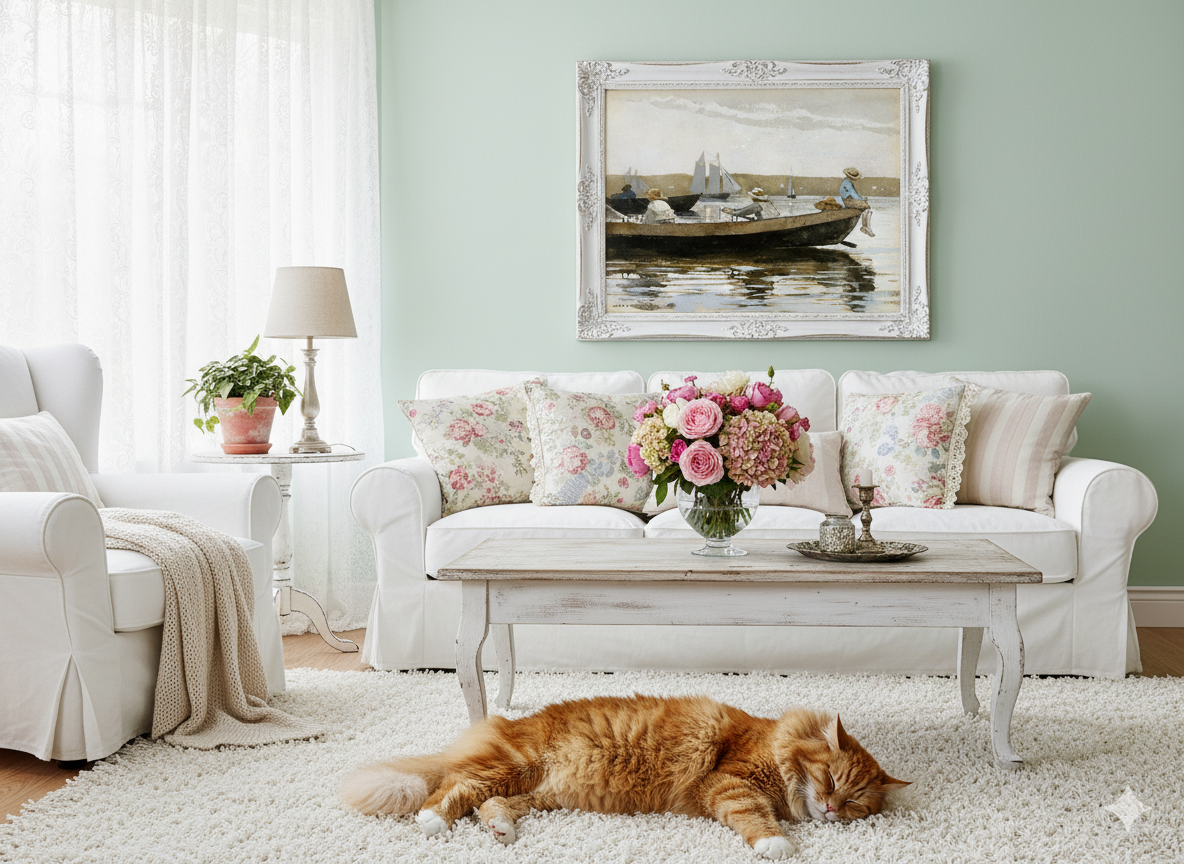
Owning a print of Boys in a Dory feels like keeping a fragment of American summer pure, unhurried, and full of quiet wonder. It’s a piece that softens any space it inhabits, inviting you to slow down and remember the beauty in simple moments. If this painting speaks to you, take a look at our curated collection of digital art prints, where we celebrate timeless works like Homer’s and help bring that same spirit of calm and light into your own home.
 Ngoluoc.vn
Leave a comment