
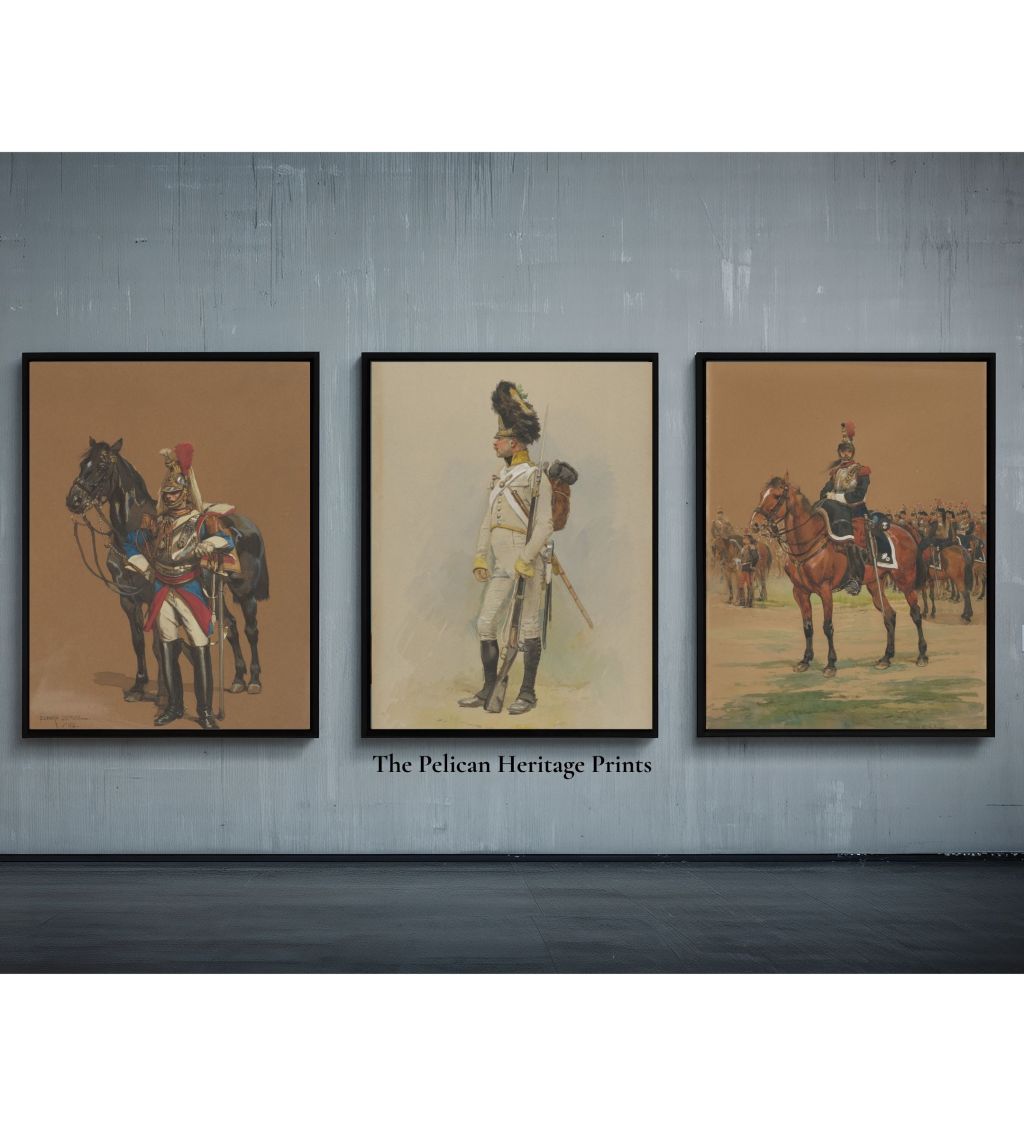
In the grand narrative of nineteenth-century French art, few names resonate as powerfully with the imagery of the military as Édouard Detaille (1848–1912). Nicknamed “the soldier of painting,” Detaille was not just a chronicler of uniforms and maneuvers but a man who lived and breathed the ethos of discipline, honor, and collective memory. His works are not merely pictures of men in uniform. They are evocations of an entire atmosphere, a national mood, and a reverence for history that is both documentary and poetic.
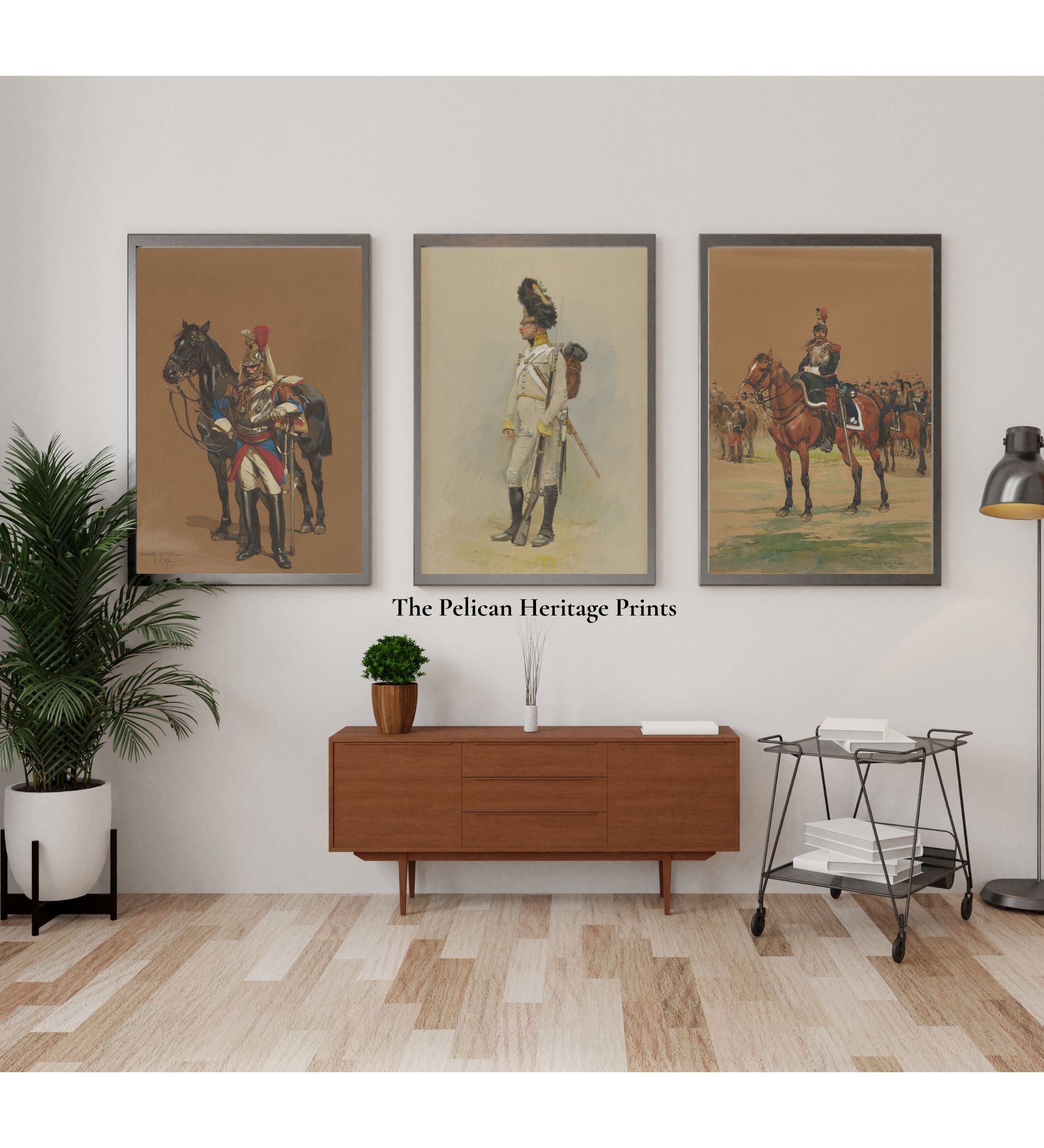
Among his vast output, three works stand out as particularly telling: French Cuirassier (1872), A Standing Grenadier of the Municipal Guard (1891), and Cuirassier (1872). Each of these is modest in size, yet immense in resonance. Each isolates a single soldier or a type, stripping away the chaos of battle, and instead offering us a distilled symbol of what it meant to embody French martial pride in the decades after the Franco-Prussian War. Taken together, they form a kind of triptych, a visual symphony whose movements alternate between stillness, brilliance, and exacting detail.
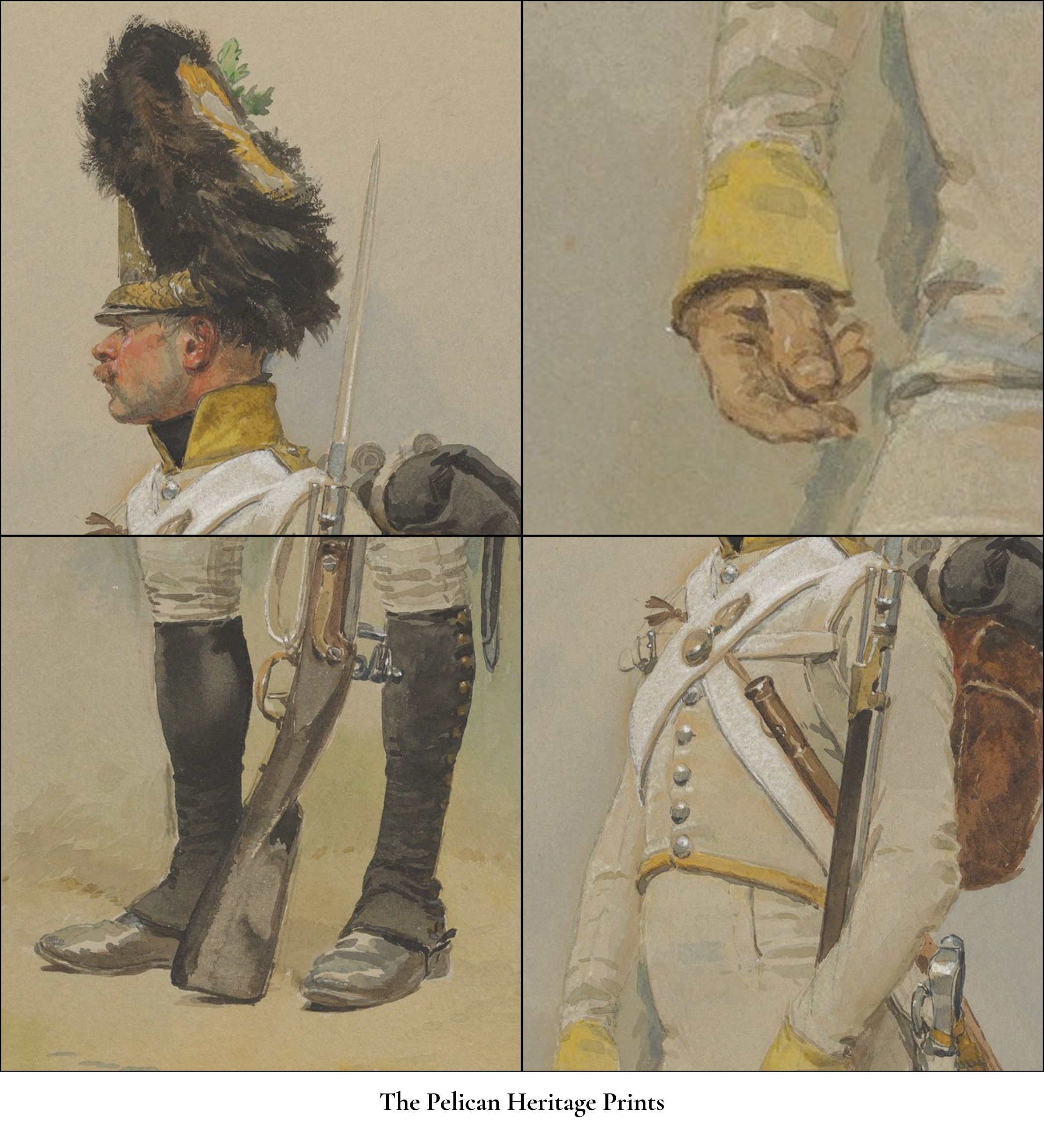
The Discipline of Stillness: A Standing Grenadier of the Municipal Guard (1891)
In A Standing Grenadier of the Municipal Guard, Detaille gives us a soldier who simply stands. At first glance, nothing could be less dramatic. Yet this very restraint is what gives the piece its power. The grenadier, painted in watercolor heightened with white, rises upright like a living statue. He does not move, does not fight, does not cry out. He is presence incarnate.
This stillness is not emptiness. It is the embodiment of discipline, of readiness, of the quiet strength that undergirds order. Painted at the end of the nineteenth century, when Paris was a modernizing metropolis, the grenadier symbolized the guardianship of civic stability. With a few strokes, Detaille captures the dignity of a soldier whose authority lies not in violence but in composure.
The painting, about 52 by 30 centimeters, might seem modest, but its effect is monumental. It is a visual reminder that the essence of military virtue is not always in battle but in the ability to stand fast.
The Brilliance of Steel: Cuirassier (1872)
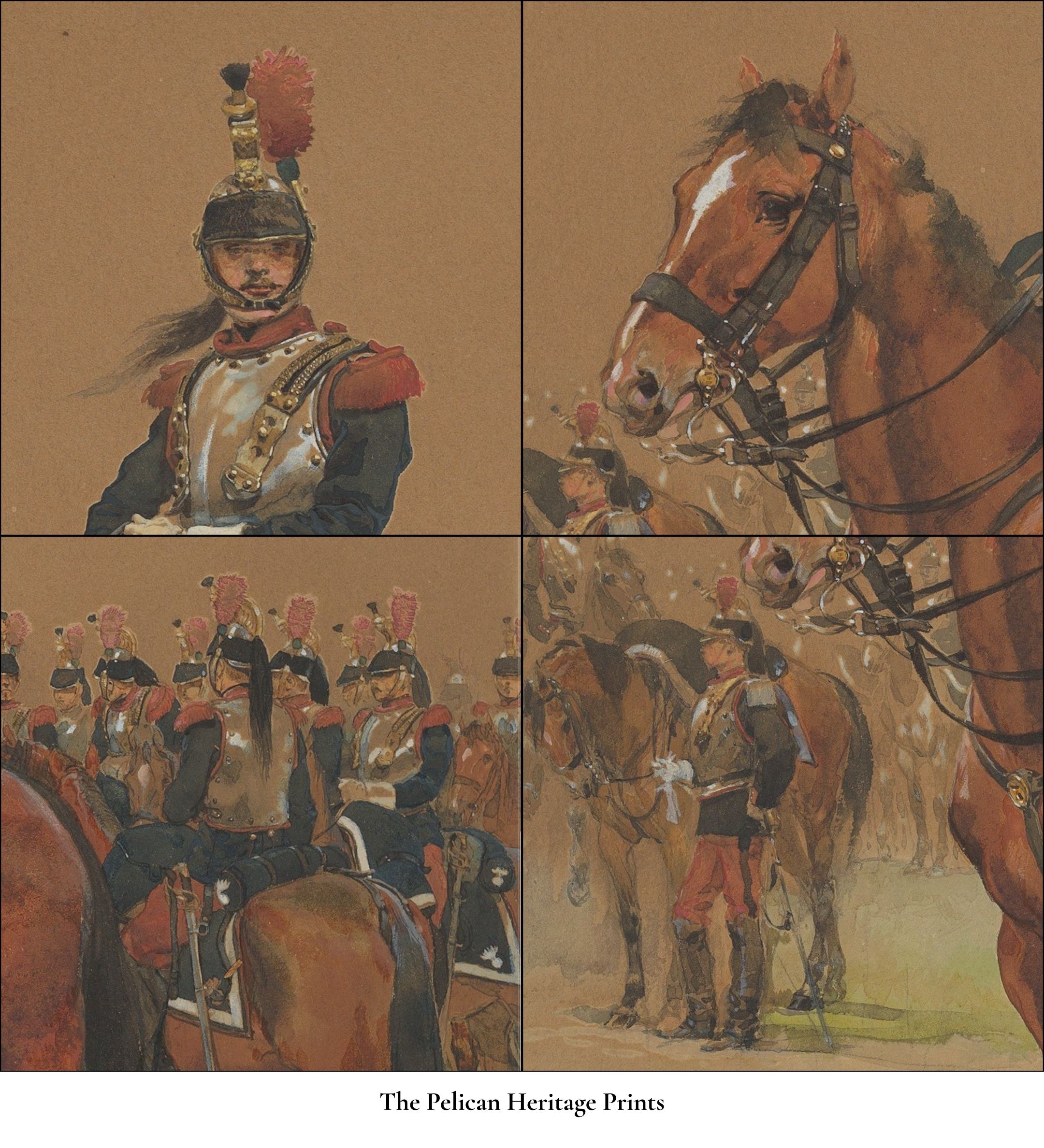
If the grenadier embodies stillness, the Cuirassier of 1872 embodies tension and latent power. Painted in watercolor and gouache on paper only two years after France’s catastrophic defeat in the Franco-Prussian War, the work is suffused with both melancholy and pride.
Here we see a heavy cavalryman clad in gleaming armor. The figure is static, but the image vibrates with potential energy. The steel plates reflect light in crisp highlights, while the folds of fabric beneath soften the composition. The soldier is faceless, more symbol than individual. He is the idea of the cuirassier — the knightly horseman of France’s martial tradition — condensed into a single upright figure.
What makes the piece remarkable is its paradox. The medium of watercolor is fragile, transparent, easily dissolved by water. Yet Detaille uses it to render the weight and permanence of steel. This contradiction heightens the tension of the image: fragility and solidity, ephemerality and endurance.
It is as if Detaille is saying that France’s strength may have been shaken in war, but the image, the memory, the ideal of martial valor remain indestructible.

The Study of Detail: French Cuirassier (1872)
Created in the same year, French Cuirassier is another watercolor, smaller than the Cuirassier but equally evocative. This time, Detaille’s focus is not on symbolic tension but on academic precision. The drawing is exact, the proportions measured, the armor meticulously rendered.
In many ways this is a study, a working sheet for future compositions. Yet it has an energy of its own. The soldier here is not abstracted into pure symbol. He is more particular, more observed, as though Detaille wanted to record every stitch and rivet for posterity.
The value of this piece lies in what it reveals of the artist’s method. Detaille was not content to invent. He documented, researched, rehearsed. French Cuirassier shows his devotion to accuracy, to the kind of fidelity that makes his larger canvases feel both authentic and authoritative.
Together, a Symphony
When viewed side by side, these three works create a rhythm.
- The Standing Grenadier is a low, solemn note, a slow movement of quiet dignity.
- The Cuirassier is a bright, brassy chord, ringing with tension and potential action.
- The French Cuirassier is a more intricate passage, detailed and deliberate, like the ornamentation in a symphonic score.
Together they form a triad, a mini-symphony of French military identity. Each painting on its own captures a type, but together they narrate a vision of what it meant to embody honor in uniform.
The decades between 1870 and 1900 were fraught for France. The humiliation of 1870 lingered like a national wound. Yet in the wake of defeat, there arose a culture of remembrance, pride, and rebuilding. Detaille’s paintings were part of this culture. They offered viewers not the gore of battle but the dignity of soldiers. They reassured a wounded nation that the ideals of discipline, courage, and honor still stood intact.
Detaille’s approach has often been criticized as idealizing war. He rarely shows blood, mud, or death. But that criticism misses his purpose. He was not a journalist. He was an artist, and his aim was to shape memory. By abstracting, by idealizing, he turned transient historical events into enduring symbols.
For the French audience of his time, this was not deception. It was consolation, pride, and a way of re-inscribing national dignity onto the canvas.
From a modern standpoint, one might wish for more grit, more acknowledgment of war’s brutality. But to dwell on what is absent is to miss what is present. Detaille’s paintings are not about carnage. They are about the moral qualities that soldiers were believed to embody. They are about honor, order, and resilience.
What I find most compelling is Detaille’s balance. His works are precise enough to serve as documents of uniforms and equipment, yet elevated enough to transcend mere illustration. They breathe. They resonate. They are both textbooks and poems.
When I look at the Standing Grenadier, I feel the weight of discipline. When I gaze at the Cuirassier, I sense the gleam of pride. When I study the French Cuirassier, I marvel at the meticulous care of an artist who wanted to ensure nothing was lost to time.
Together, they remind me that history is not only a record of events but a shaping of memory, and that art has the power to crystallize ideals into enduring forms.
The three paintings of Édouard Detaille are more than military studies. They are fragments of a cultural symphony that gave France a sense of dignity in the shadow of defeat.
- A Standing Grenadier shows the strength of composure.
- Cuirassier radiates the brilliance of martial symbolism.
- French Cuirassier reveals the devotion to detail that underpins the whole.
Taken together, they speak of a nation’s longing to remember itself not in shame but in pride. They show how an artist could turn steel and fabric, posture and silence, into a hymn of endurance. And above all, they remind us that the art of memory is as vital as the memory of art.
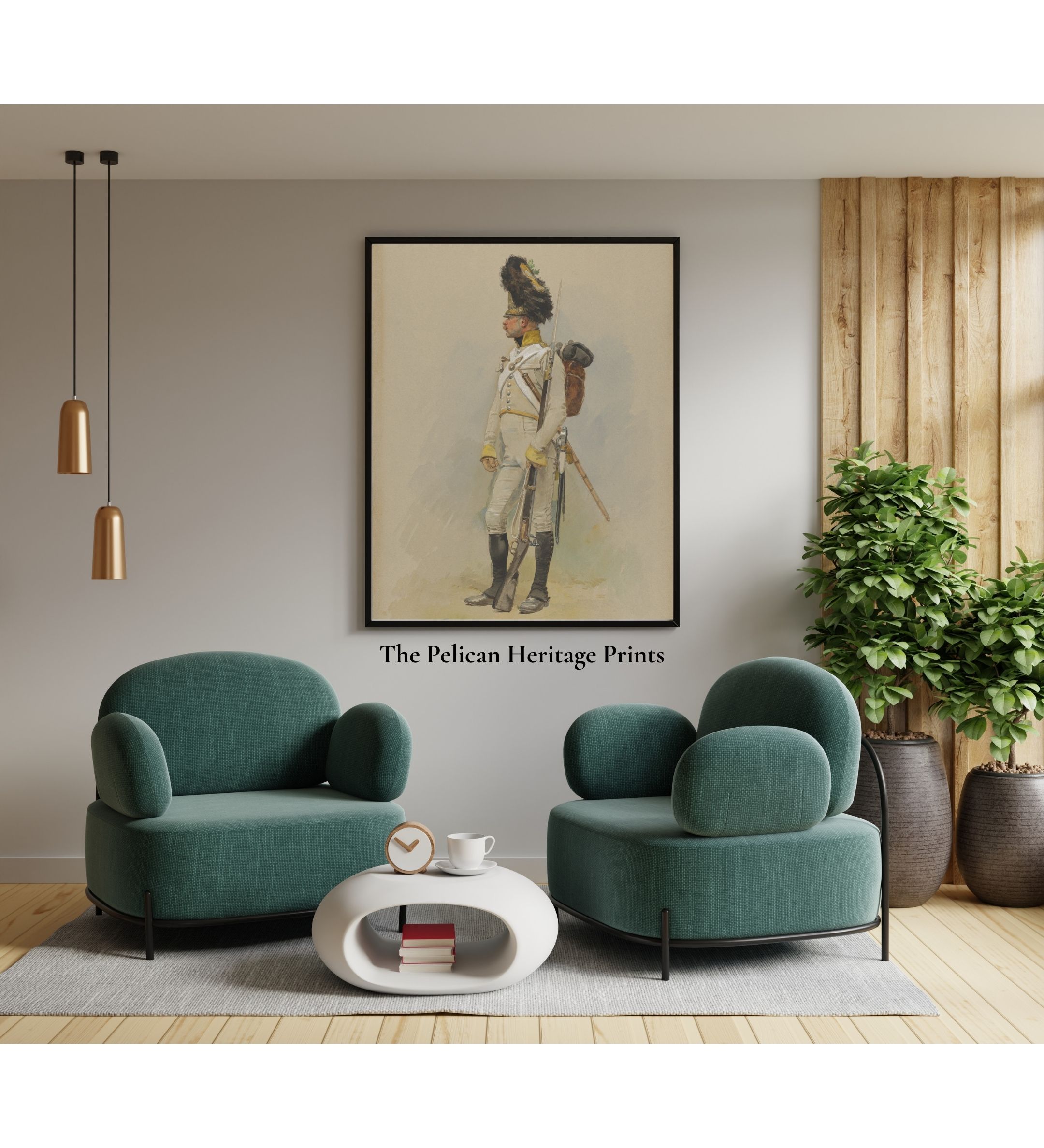
For those who wish to keep a piece of this spirit close — to bring the timeless dignity of Detaille’s soldiers into their own living space — there are beautiful digital reproductions available. You can explore a curated set of three French soldier art prints here: French Soldier Art Prints – Set of 3 on Etsy.


 Ngoluoc.vn
Leave a comment