
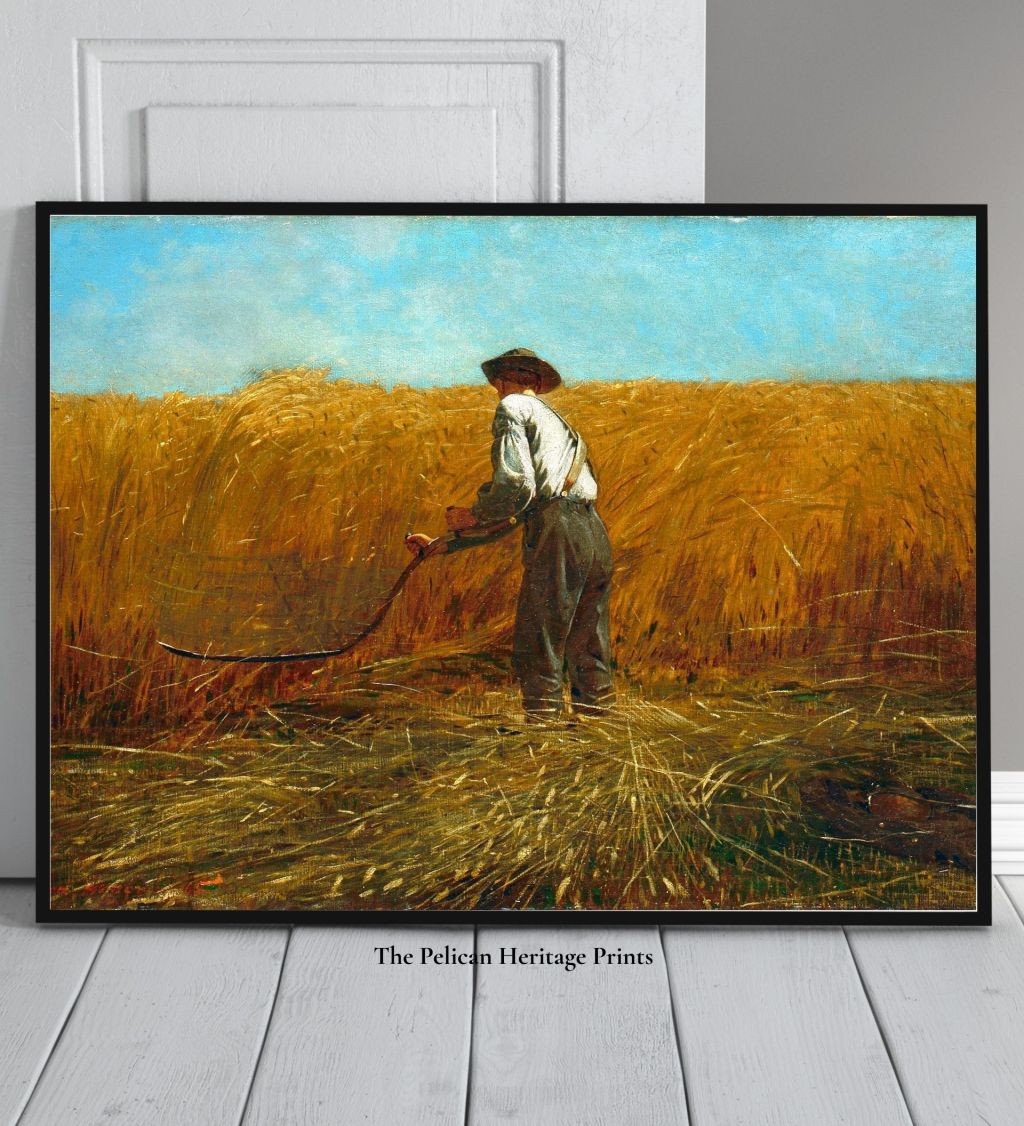
Winslow Homer’s The Veteran in a New Field has a way of drawing you in slowly. At first, it seems like a simple pastoral scene a lone man, bent forward, harvesting golden wheat beneath a wide blue sky. Yet a closer look reveals that this figure carries a heavier story. Set down near his feet are a Union Army jacket and canteen, quiet reminders that this is not just any farmer. He is a soldier returned home from the American Civil War, trading one kind of field for another.
Painted in 1865, the year the war ended and Abraham Lincoln was assassinated, the work reflects a nation caught between grief and renewal. Homer, who had spent the war years working as an illustrator at the front, knew how deep the scars ran. His canvas captures the uncertainty of a moment when people wanted desperately to rebuild, yet could not escape the shadow of so much loss.
The painting’s symbols are deceptively simple. The scythe in the veteran’s hand is practical, but it also evokes the ancient image of the Grim Reaper. It suggests that even in the act of reaping life-giving grain, death lingers nearby. The very title, a new field, carries double meaning both the literal harvest and the figurative task of beginning again in peace.
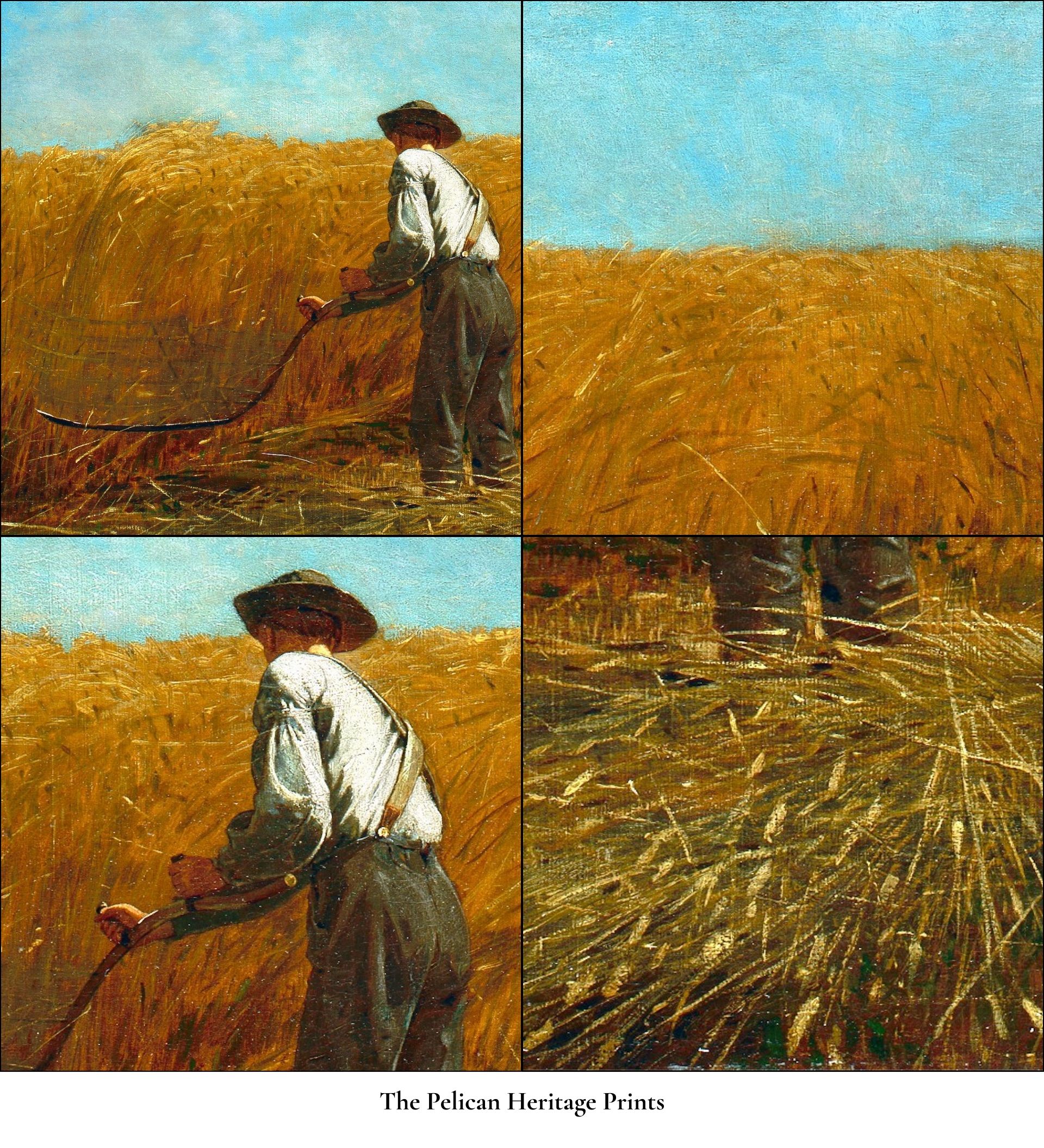
Homer keeps the figure anonymous, his face hidden, his body swallowed by the vastness of the wheat field. This anonymity universalizes the experience. He could represent any of the countless men who returned home after the war, shouldering silence and responsibility. The wheat itself dominates the composition, glowing with abundance. Nature seems to continue in its cycles, indifferent yet generous, as if offering a path forward.
Placed alongside Homer’s later Breezing Up (A Fair Wind), painted a decade later, the contrast is striking. That later canvas shows a boat filled with children and a father looking eagerly ahead, full of hope. The Veteran in a New Field, in contrast, sits in a more tentative space, where hope is possible but not yet secure. Where Breezing Up celebrates optimism, The Veteran acknowledges grief first, then gently allows renewal to enter.
Other artists of the time approached war differently. Eastman Johnson often leaned toward sentiment and emotion, highlighting sacrifice or the heartbreak of separation. European painters after the Franco-Prussian War often favored patriotic allegory or mournful symbolism draped in flags and national pride. Homer’s voice is distinct. He strips away overt patriotism and drama, offering instead a picture of labor, humility, and the difficult work of living on.
There is also something deeply American in this choice. The land, not the state, becomes the grounding force. Homer suggests that the healing of a country does not happen through speeches or ceremonies, but through the steady work of men and women returning to their fields, reclaiming daily life one harvest at a time.
I find myself moved by the painting’s restraint. There is no visible anguish, no obvious triumph. Just the steady swing of the scythe, the glow of the wheat, the silence of the sky. It feels both mournful and hopeful, as though the land itself absorbs memory yet continues to give.
In its quiet way, The Veteran in a New Field is one of Homer’s most profound achievements. It does not glorify war or minimize its cost. Instead, it honors survival, the return to the ordinary, the resilience that makes life after loss possible. And in that way, it continues to speak not only as a historical artifact but as a timeless meditation on how people rebuild after devastation.
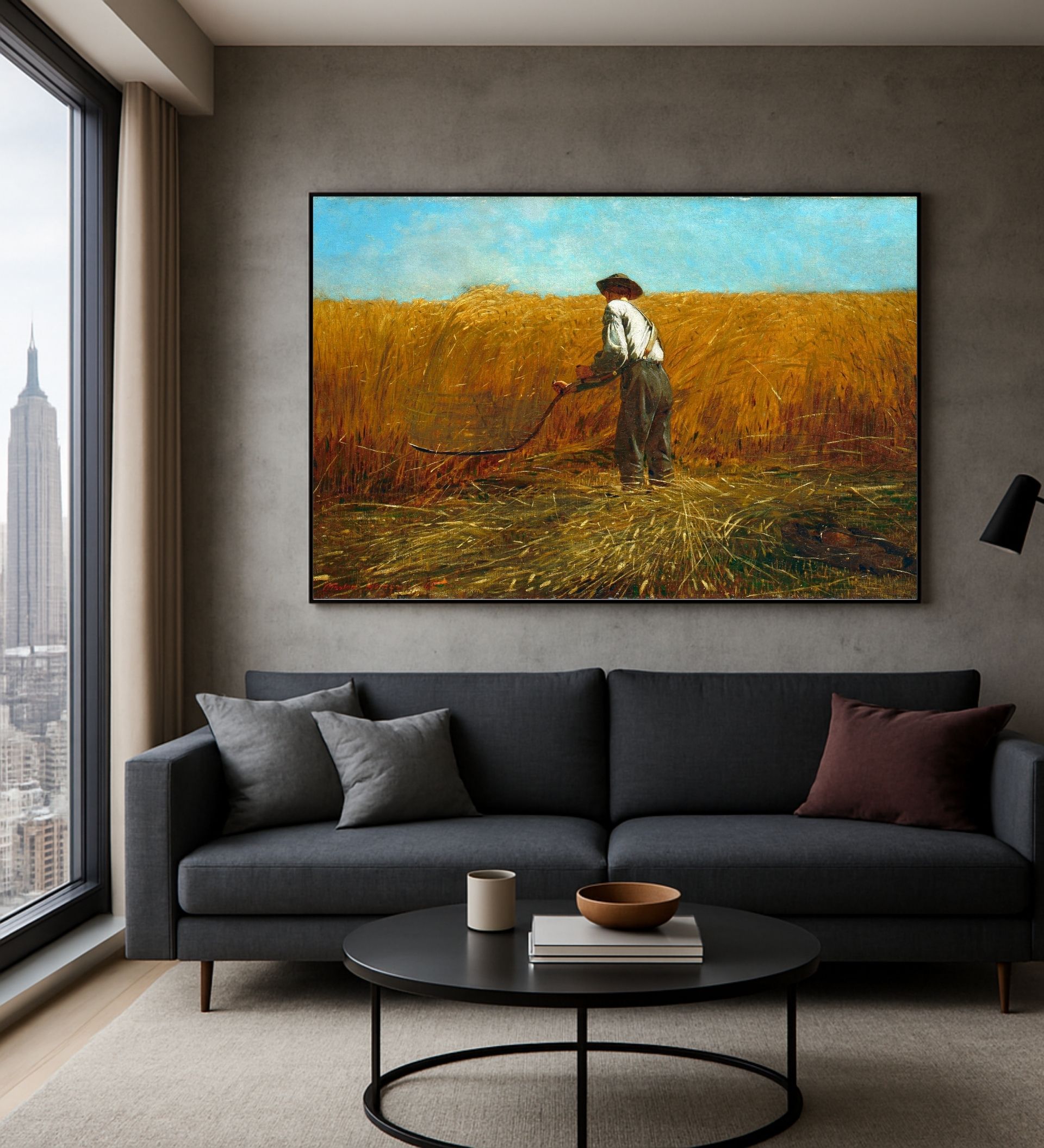
For anyone drawn to artwork that balances history with emotion, Homer’s canvas is a remarkable piece. If this reflection stirs you, I warmly invite you to explore more digital prints on our website, where you’ll find artworks that echo these themes of strength, simplicity, and renewal. Bringing them into your home is like keeping a quiet reminder of resilience close at hand.
 Ngoluoc.vn
Leave a comment