
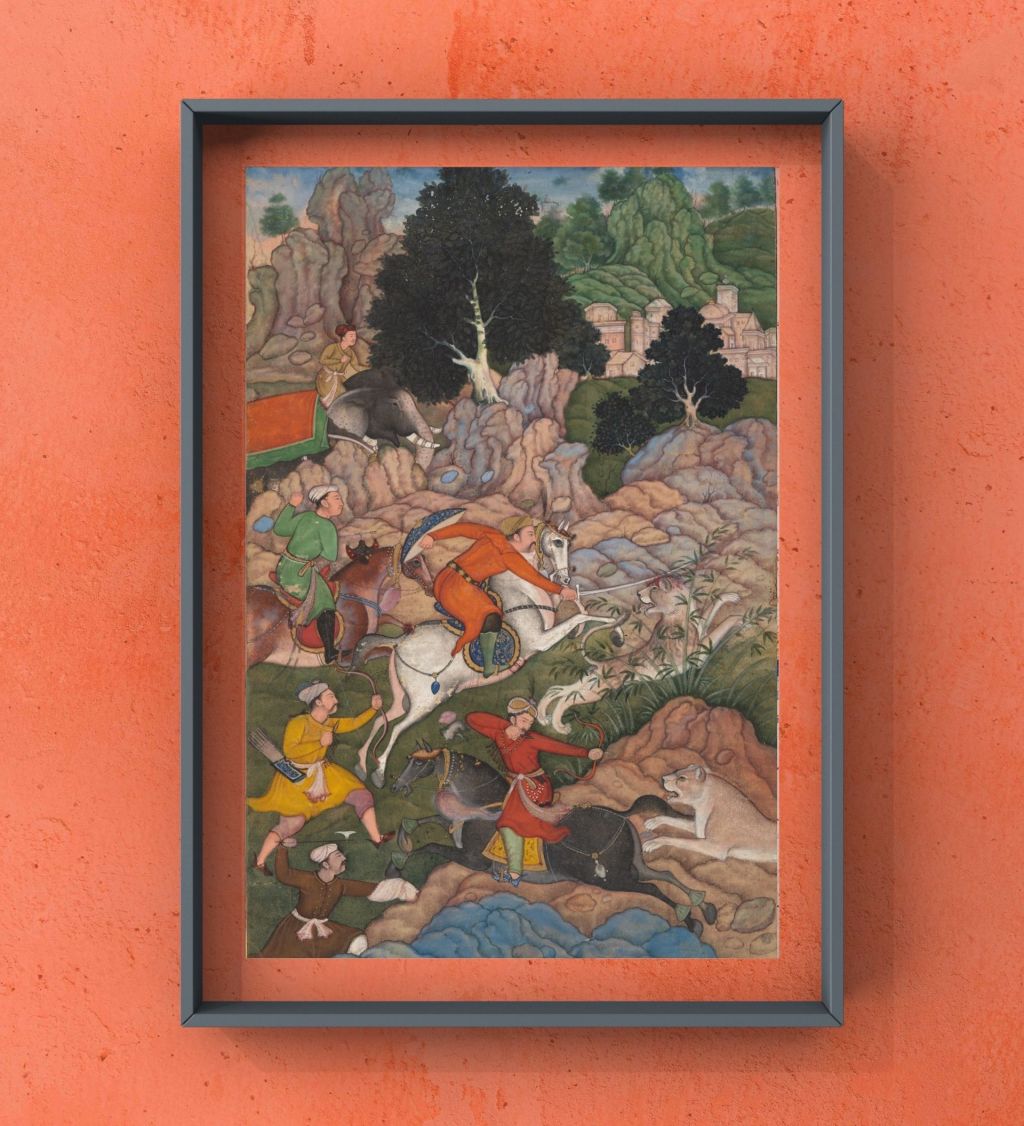
There’s something mesmerizing about how art captures authority. The royal hunt, or shikar, wasn’t just sport, it was theater, ritual, and power rolled into one. Looking at Mughal miniature paintings, you can almost hear the gallop of horses, the rustle of brush, and the sharp breath before a blade struck. These weren’t simply hunting records. They were coded messages about imperial strength, courage, and divine right.
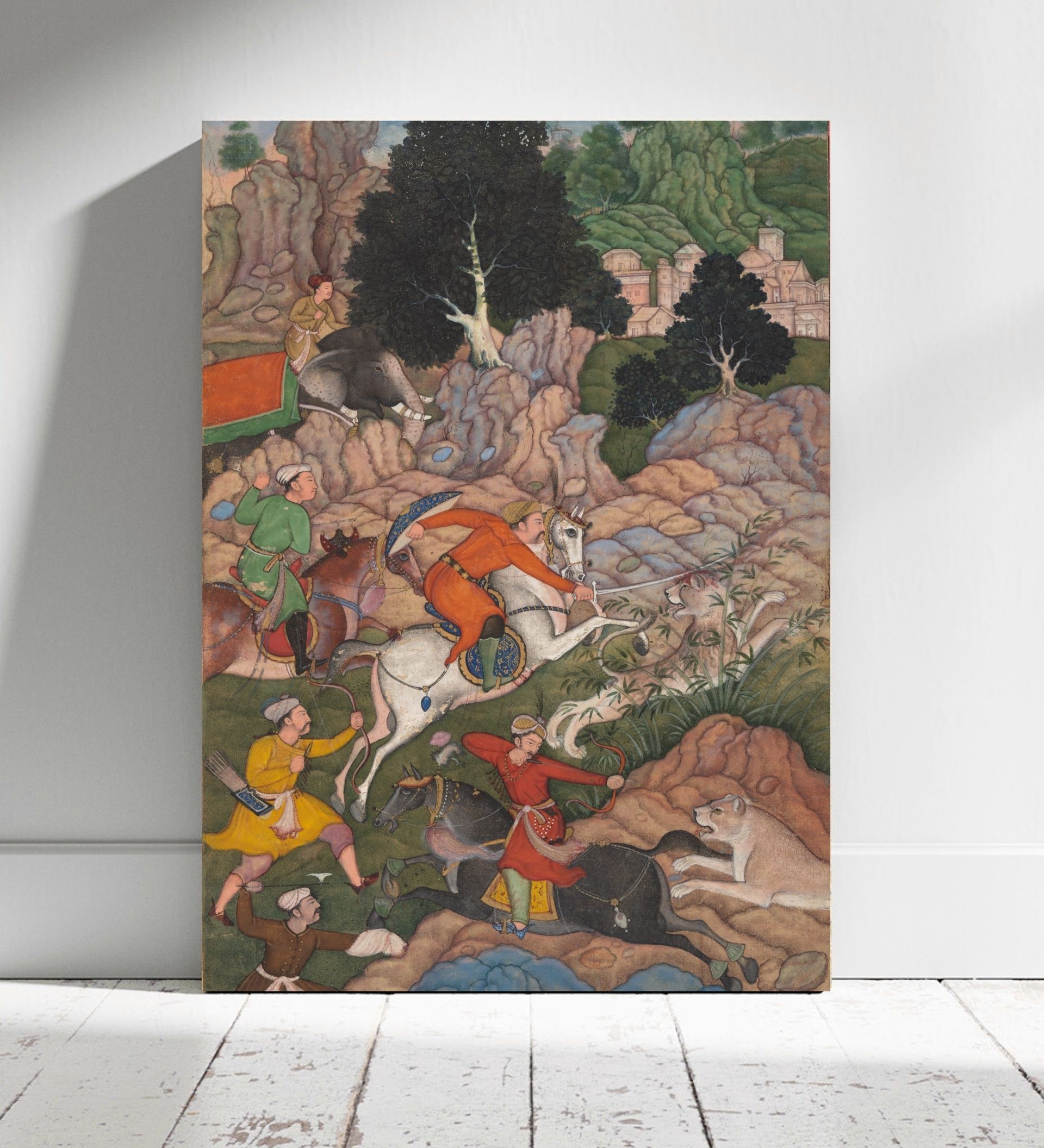
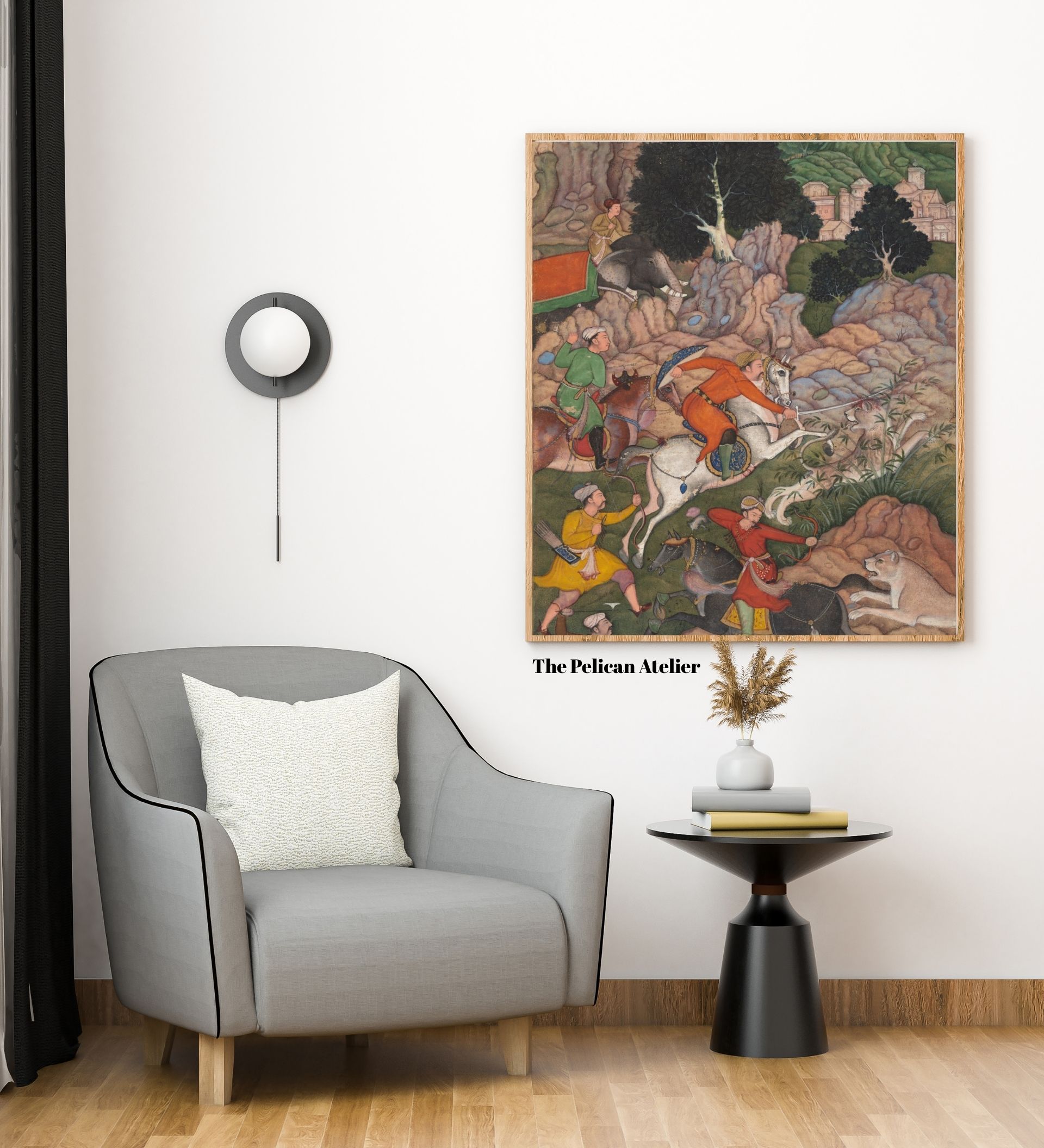
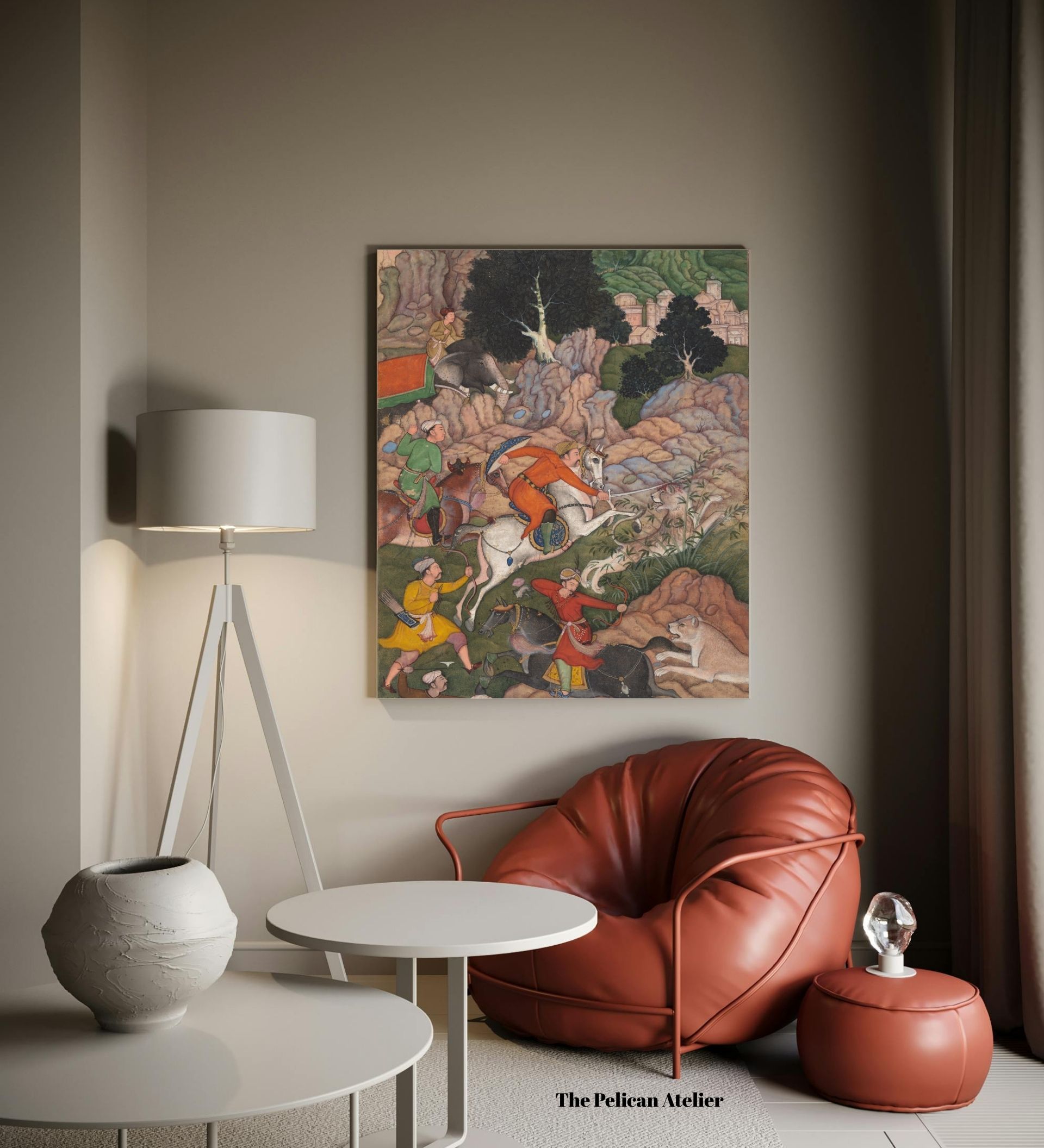
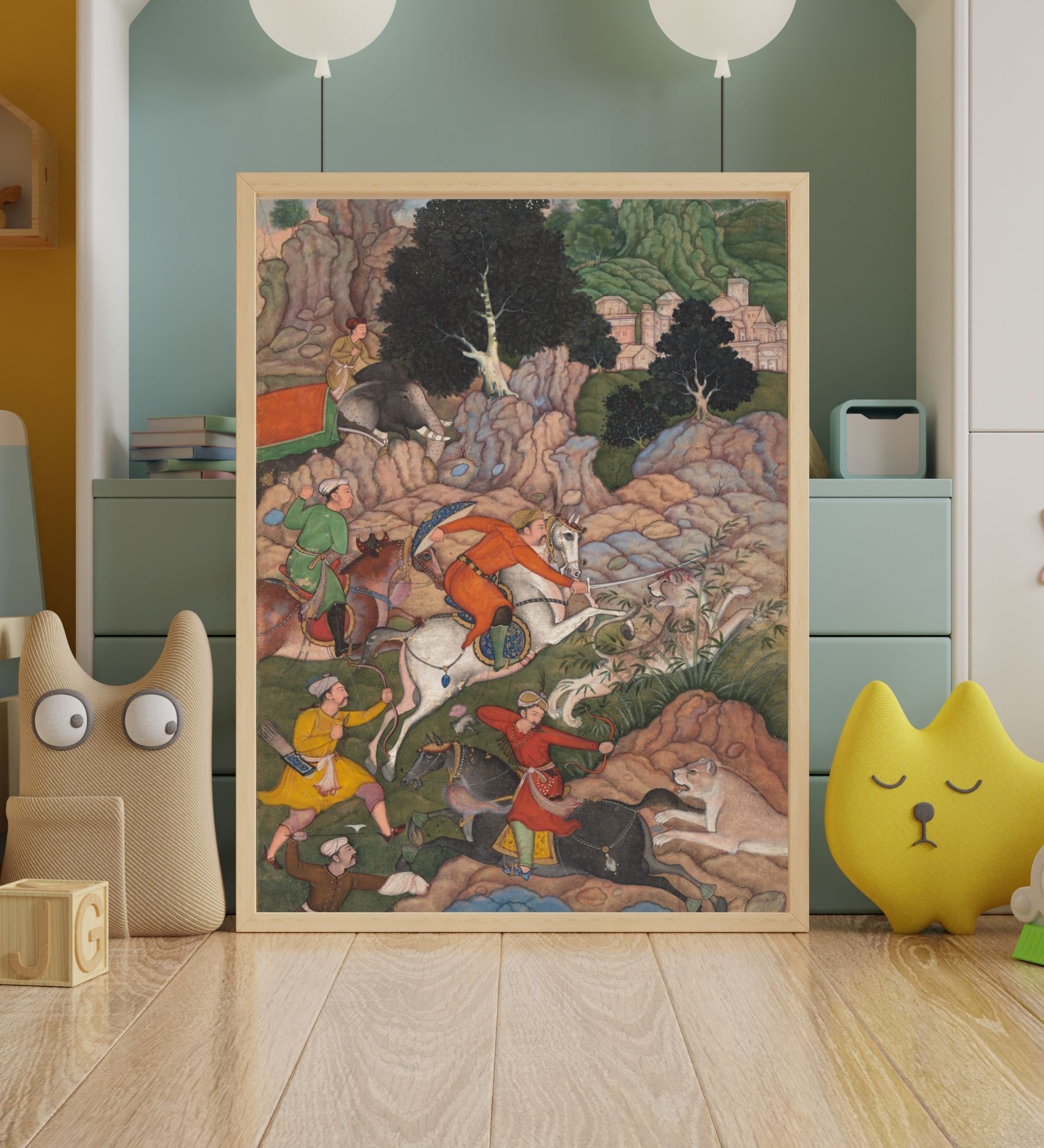
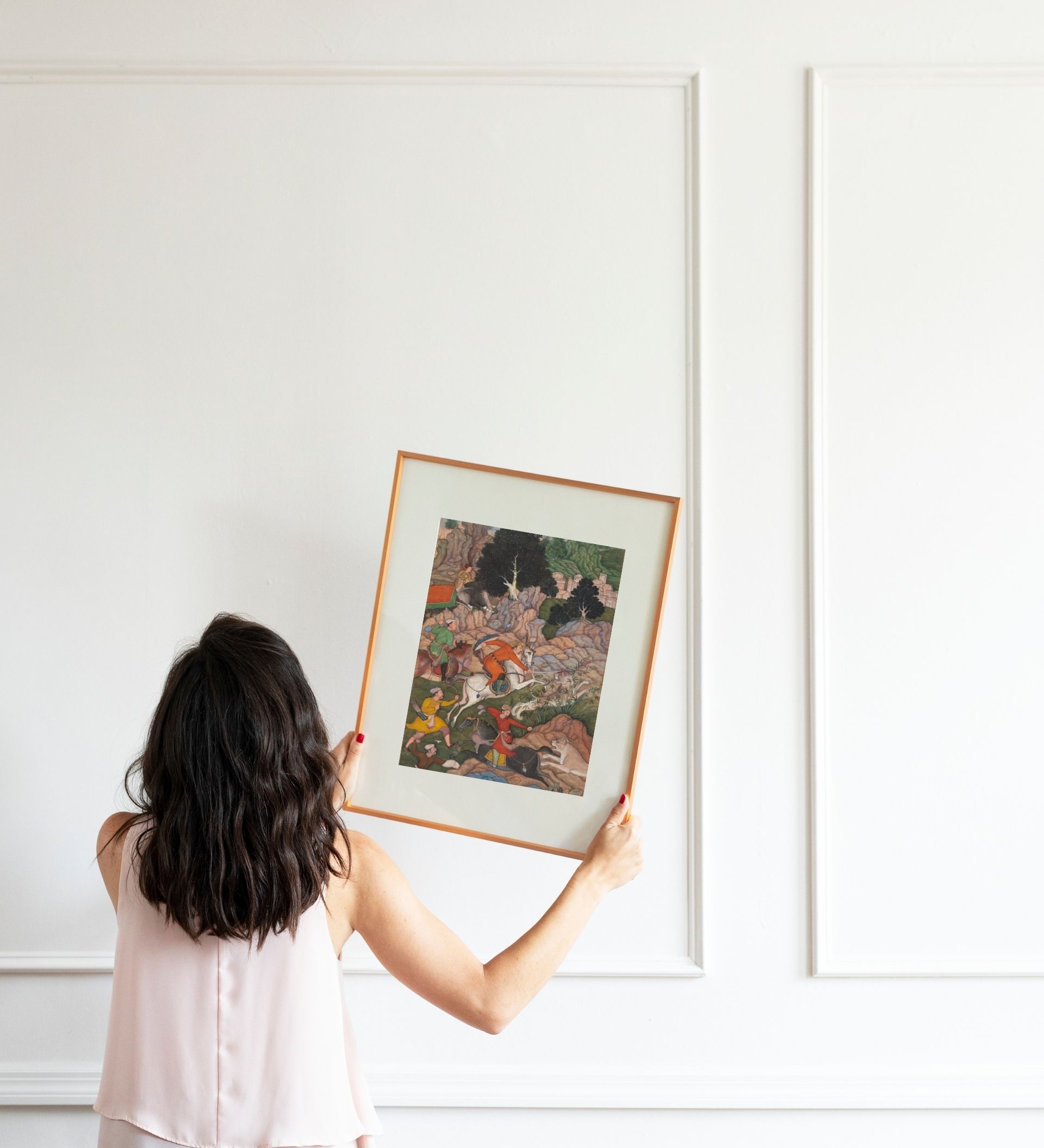
One striking example is the late 16th-century folio Akbar Hunting. Emperor Akbar is shown lunging at a lioness, his sword gleaming, surrounded by noble companions. The formation resembles a battlefield, underscoring that a hunt was never just leisure, it was practice for war and a metaphor for kingship. To kill the lion, an animal reserved only for emperors, was to claim ultimate valor. You can even explore a beautiful reproduction of this work as wall art on Etsy here.
But what I love is the quiet counterpoint nearby: Lion at Rest by Ustad Mansur. Instead of ferocity, we see calm poise. The lion lounges in a grove, birds and insects fluttering around, bamboo swaying softly. It’s a reminder that nature is not just conquered, but also observed, cherished, and meticulously documented. Mansur’s eye for detail earned him the title Wonder of the Age at Jahangir’s court. You sense the awe of a painter who, while serving power, couldn’t resist celebrating beauty for its own sake.
Another painting, Preparations for a Hunt, shifts perspective yet again. Here the landscape stretches wider, the figures scattered across hills and plains. It feels less like spectacle, more like anticipation, almost cinematic. The pause before action.
What ties these works together is the duality of the royal hunt, both violent and poetic, both political and natural. It is spectacle, but also storytelling, a way of preserving memory and myth. These Mughal miniatures are not just historical records. They’re layered narratives of ambition, strategy, and the eternal dance between human will and the wilderness.
I have to admit, they left me thinking about how art always carries whispers of the world around it, court politics, shifting empires, human desires. And yet, centuries later, we’re drawn in not just by power but by details like a blade of grass, a flick of a lion’s tail. That’s the quiet magic of these works.
If pieces like this stir your imagination too, I’d encourage you to explore more digital art prints inspired by Indian miniatures and Mughal heritage. You can find similar treasures by searching The Pelican Atelier on Amazon or Etsy, where history and artistry meet in a way that feels timeless.
 Ngoluoc.vn
Leave a comment